
The Starlink-Connected Public Safety Vehicle
Public safety vehicles are becoming more than transportation. With Starlink and managed multi-network connectivity, they can become mobile communications platforms that keep personnel, applications, and critical systems connected wherever operations take them.
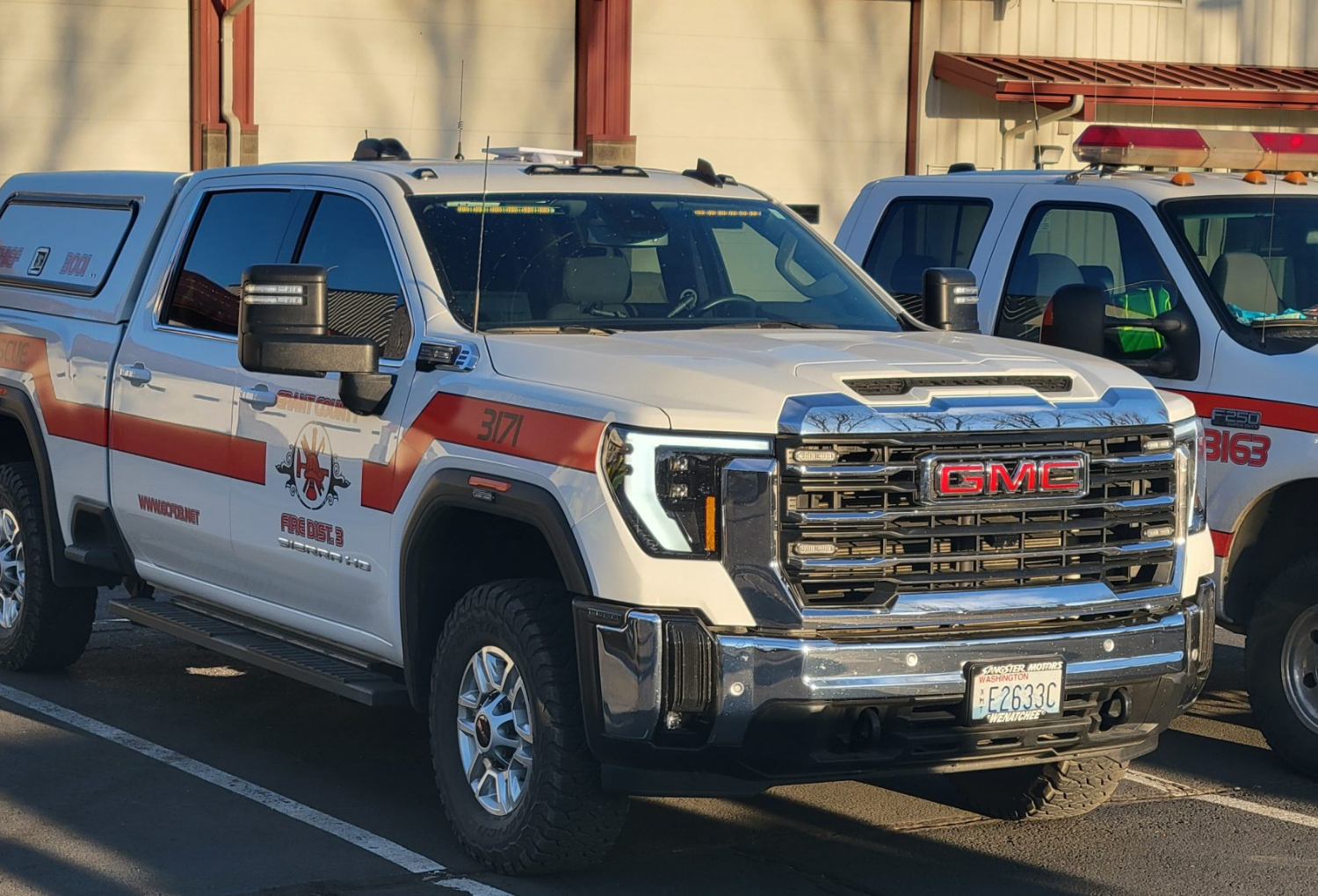
For decades, the public safety vehicle has carried the communications equipment needed to support the mission.
Radios. Mobile data computers. Routers. Cameras. GPS. CAD and AVL systems. Tablets. Phones. Real-time video. Cloud-based applications.
All of those technologies share one basic requirement: they need connectivity.
As public safety operations become increasingly dependent on IP-based applications, the vehicle's connection to the outside world becomes increasingly important.
Starlink is changing what is possible. By adding high-speed, low-Earth-orbit satellite connectivity to fire apparatus, ambulances, command vehicles, law enforcement vehicles, emergency management assets, and other mobile platforms, agencies can create connected vehicles that carry their own communications environments into the field.
The Public Safety Vehicle Is Becoming Part of the Network
Think about how much information now moves through a modern public safety vehicle. Depending on the mission, personnel may need access to a wide range of systems, devices, and applications.
The vehicle is no longer simply transporting people and equipment to an incident. It is becoming a mobile extension of the agency's communications infrastructure.
Why Starlink Changes the Equation
Cellular connectivity has played an important role in connected public safety vehicles for years, and it will continue to do so. But cellular networks depend on terrestrial infrastructure.
Coverage can become limited in remote areas. Capacity can become constrained during major incidents. Towers can lose power or backhaul during disasters. A vehicle may also move beyond the usable footprint of a particular carrier.
Starlink introduces a different communications path into the vehicle. Rather than depending on a nearby cellular tower, it connects through a low-Earth-orbit satellite network capable of supporting mobile operations.
This gives agencies another way to reach critical IP-based resources when terrestrial connectivity is unavailable, degraded, congested, or outside the operational area.
The choice does not have to be Starlink or cellular. The stronger model is often Starlink and cellular.
Learn more about why emergency response fleets are adding Starlink connectivity .
A Connected Vehicle Should Have More Than One Path
Public safety communications have traditionally been built around redundancy for a reason. Vehicle connectivity should be approached with the same mindset.
Each network has strengths. Each also has environments where its availability and performance may change. A properly designed vehicle can use multiple available paths instead of depending entirely on one network.
That is the idea behind SuperGIG™ , the managed IP Access network. SuperGIG brings selected space-based and terrestrial connectivity paths into one managed environment, allowing the vehicle's connectivity to be designed around network quality, applications, users, and operational requirements.
Starlink becomes part of the vehicle's larger communications architecture—not an isolated connection.
The Vehicle Can Create a Connectivity Bubble
Once reliable connectivity reaches the vehicle, its usefulness does not necessarily stop inside the cab.
The vehicle can become the center of a local connectivity bubble supporting authorized personnel, applications, and devices operating around it.
Laptops, tablets, phones, cameras, and other IP-enabled equipment can connect through the vehicle's communications system. Instead of every device requiring its own independent path, the connected vehicle becomes part of the field communications architecture.
Starlink Can Support More Than Data
One of the most important developments in connected-vehicle communications is the convergence of broadband IP connectivity and traditional public safety radio systems.
Land mobile radio remains critical to public safety. The opportunity is not necessarily to replace it. It is to extend its reach.
With the appropriate radio gateway and network architecture, a portable radio that cannot directly reach its normal LMR infrastructure can communicate through a nearby connected vehicle.
The IP path from the vehicle can use available terrestrial or satellite connectivity. This means a Starlink-connected vehicle can potentially play a role not only in keeping computers and applications online, but also in extending radio communications into environments where direct LMR coverage is difficult.
This may include remote areas, large incident scenes, lower levels of buildings, reinforced structures, or locations where terrestrial infrastructure has been disrupted.
One Vehicle Is Easy. A Fleet Is an Operational System.
Installing Starlink on a single vehicle is one thing. Deploying it across 10, 50, 100, or hundreds of public safety vehicles introduces a different set of operational questions.
- Who manages the terminals and service plans?
- Who monitors connectivity performance?
- How is fleet data usage managed?
- How are installations standardized?
- How are different vehicle types accommodated?
- How are cellular and satellite paths integrated?
- Who handles service issues and troubleshooting?
- How does the architecture scale across the agency?
For public safety agencies, IP Access helps design, deploy, and support the complete connectivity environment around the vehicle. The objective is not simply to activate satellite service. It is to create a consistent communications platform the agency can manage and support across its fleet.
More Than Starlink Hardware and Service
IP Access International is an Authorized Starlink Reseller with more than 27 years of experience supporting satellite and mission-critical communications.
For public safety agencies , our role extends beyond providing a Starlink terminal. We help agencies design the connected-vehicle environment around the operational requirement.
A Different Way to Think About the Public Safety Vehicle
Public safety agencies invest heavily in fixed communications infrastructure. But their vehicles are already distributed throughout the communities those systems are designed to serve.
They travel directly to incidents. They move with personnel. They operate during emergencies. Increasingly, they can carry their own connection to terrestrial and space-based networks.
That creates an opportunity to think differently about communications infrastructure.
A reliably connected fire engine, ambulance, patrol vehicle, command vehicle, or emergency management asset is not simply another endpoint on the network. It can become part of the network itself.
Starlink is an important piece of that evolution. But the real transformation happens when Starlink, cellular connectivity, vehicle networking, applications, and communications systems are designed together.
Design the Network Around Your Operational Requirements
Whether your agency is evaluating Starlink for a few vehicles or planning managed connectivity across an entire fleet, IP Access can help build a scalable connected-vehicle strategy.
Starlink. Cellular. SuperGIG™. One managed connectivity environment built for critical operations.
Talk With IP Access