
Starlink for First Responders: Connectivity for Emergency Response When Networks Are Limited
Starlink gives first responders another way to reach critical applications when terrestrial networks are unavailable, congested or simply do not extend to the incident.
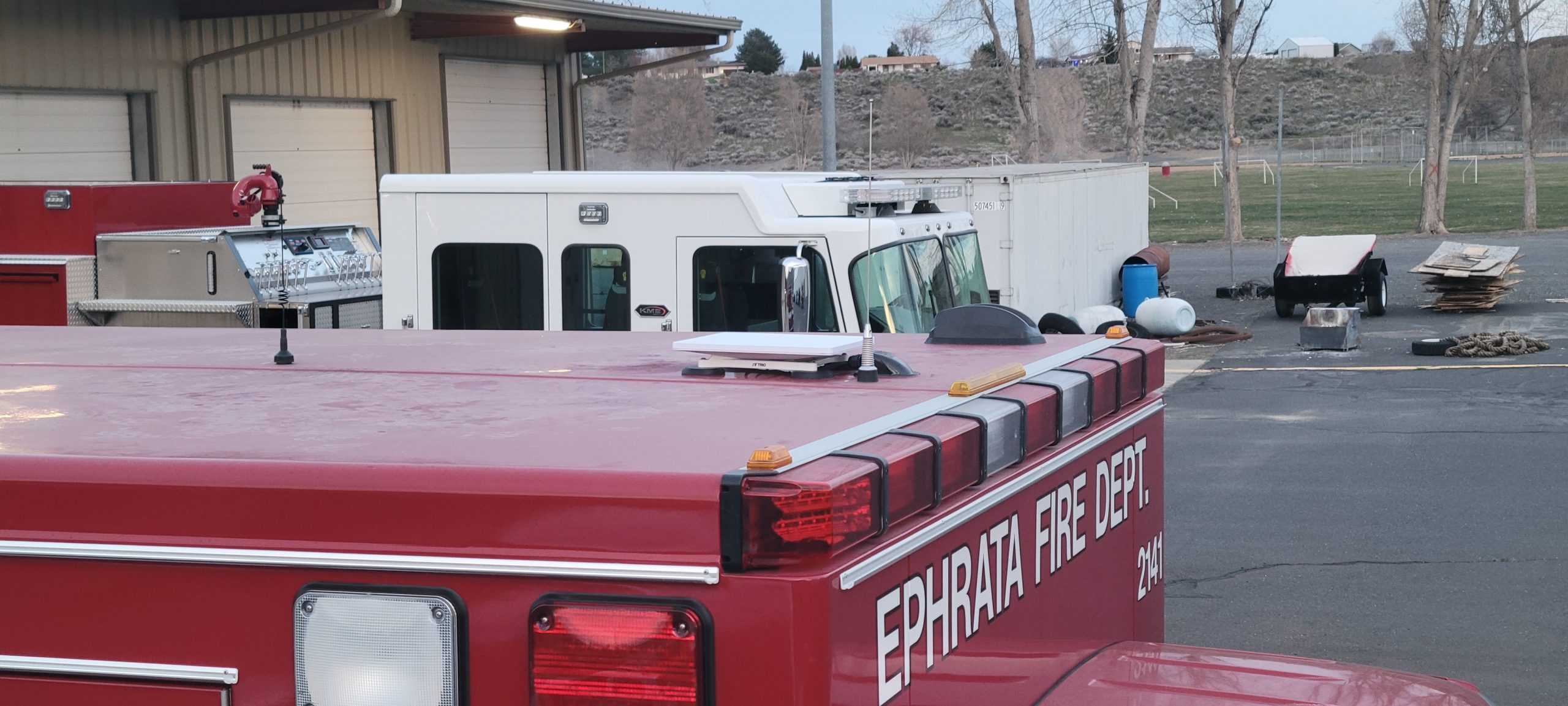
When first responders arrive at an emergency, they rarely get to choose the communications environment. A wildfire may take crews beyond normal cellular coverage. A hurricane can damage terrestrial infrastructure. A large-scale incident can overwhelm otherwise dependable networks. Search-and-rescue teams may operate miles from the nearest reliable connection. An incident command post may need to be established wherever the response requires it—not wherever internet service happens to be available.
Yet the applications supporting modern emergency response increasingly depend on IP connectivity. Computer-aided dispatch, mapping, situational awareness platforms, video, weather information, cloud applications, messaging and incident documentation all depend on the ability to move data.
That is one reason more agencies are evaluating Starlink for first responders and emergency response operations. But deploying satellite internet in public safety involves more than placing a Starlink terminal in the field. The larger question is how that connection becomes part of a reliable and manageable communications strategy.
Why Starlink Is Getting Attention in Emergency Response
Traditional emergency communications planning has often relied heavily on terrestrial infrastructure. Cellular networks, fiber, microwave and other systems can provide excellent connectivity under normal conditions. Emergencies, however, are exactly when normal conditions cannot be assumed.
Infrastructure may be damaged. Commercial networks may become congested. Crews may deploy into remote areas. Temporary command locations may have no existing connectivity. Vehicles may also travel across jurisdictions where network performance changes dramatically.
Low Earth orbit satellite networks such as Starlink introduce another connectivity path—one that does not depend on nearby terrestrial infrastructure in the same way cellular or wired connections do.
For first responders, that can make satellite connectivity particularly useful when operations move beyond the reach or capacity of traditional networks.
Where First Responders Can Use Starlink
There is no single emergency-response Starlink deployment. Different agencies can use the technology differently depending on the mission, vehicle, team and operating environment.
Emergency Response Vehicles
Starlink can be integrated into police vehicles, fire apparatus, ambulances, command vehicles, emergency management vehicles and other mobile platforms to support connected field operations.
Incident Command Posts
Portable satellite connectivity can help establish internet access at temporary command posts, staging areas and field locations where existing infrastructure is unavailable.
Disaster Response
During hurricanes, wildfires, floods, earthquakes and other major incidents, satellite connectivity can provide another path while local terrestrial infrastructure is degraded or being restored.
Rapid Deployments
Portable Starlink systems can support emergency management teams, mutual-aid operations, communications units and other temporary field deployments.
Emergency Response Vehicles
Starlink can be integrated into police vehicles, fire apparatus, ambulances, command vehicles and emergency management platforms. A connected emergency vehicle can support applications such as:
- CAD and dispatch information
- AVL and vehicle location
- Mapping and navigation
- Situational awareness platforms
- Video transmission
- Cloud applications
- Messaging and collaboration
- Incident documentation
- Mobile command operations
For agencies operating across large geographic areas, mobile connectivity for emergency vehicles can benefit from having more than one available network path.
Incident Command Posts
Emergency incidents do not always happen near buildings with dependable internet. Temporary incident command posts may be established in parking lots, fields, evacuation centers, staging areas or other locations selected because they make operational sense.
Portable Starlink systems can help agencies establish internet connectivity without waiting for wired infrastructure to be installed. That can provide responders with access to mapping, cloud applications, video, shared documents and other tools used to coordinate an incident.
Disaster Response and Recovery
Natural disasters can create one of the clearest use cases for satellite internet. Hurricanes, wildfires, earthquakes, floods and other events may affect terrestrial communications infrastructure at the same time demand for connectivity increases.
Starlink can provide another way for emergency-response teams to establish connectivity while local infrastructure is unavailable, degraded or being restored.
- Emergency operations centers
- Mobile command posts
- Emergency shelters
- Staging areas
- Search-and-rescue teams
- Damage-assessment crews
- Recovery operations
- Temporary public safety facilities
Portable Emergency Communications
Not every deployment needs to be permanently installed on a vehicle. Portable Starlink systems can be incorporated into rapid-deployment kits that responders transport directly to an incident.
These systems can be useful for emergency management teams, mutual-aid deployments, communications units, technical rescue teams, special events and temporary field operations.
Portability also introduces another important consideration: power. A Starlink terminal is only useful for as long as it can remain powered. Agencies planning a quick-deployment connectivity solution should consider batteries, charging, expected runtime, environmental conditions and how the entire communications kit will be managed in the field.
Starlink Should Not Have to Work Alone
Satellite connectivity can solve an important problem, but emergency communications should not simply replace dependence on one network with dependence on another.
No network performs perfectly everywhere. Starlink requires an appropriate view of the sky. Cellular performance changes by carrier, location, congestion and network conditions. Buildings, terrain, vehicle movement and the operating environment can all affect connectivity.
That is where multi-network connectivity becomes important. A public safety vehicle or deployable communications system can have access to multiple terrestrial and space-based network paths instead of depending on a single connection.
IP Access International's SuperGIG™ managed connectivity platform is designed around this approach, bringing available connectivity paths together in a managed environment so agencies can build communications around network diversity rather than a single provider.
Managing Starlink Across an Agency
Buying one Starlink terminal is different from deploying Starlink across an emergency-response organization.
As deployments grow, agencies need to think beyond the hardware. Where are terminals deployed? Which vehicles or teams are using them? What service plans are assigned? How much data is being consumed? Who handles activation and service changes? Who provides support when something stops working?
IP Access is an Authorized Starlink Reseller and can provide Starlink hardware, managed service, deployment support, professional installation and 24/7/365 U.S.-based network support.
For agencies deploying Starlink across vehicles, command assets and field teams, centralized management can help simplify what would otherwise become a growing collection of individual terminals and service plans.
Planning for Data Across Multiple Starlink Terminals
Emergency-response usage is rarely identical from one asset to another. One vehicle may consume significant data during an incident while another may use very little. A deployable kit may remain stored for weeks and then become heavily utilized during an emergency.
Depending on the deployment and selected service, pooled Starlink data options available through IP Access can help eligible organizations manage usage across multiple terminals rather than treating every terminal as an isolated connection.
For fleets and larger public-safety deployments, this can create a more practical way to manage data across vehicles, teams and field assets.
Installation Matters Too
The hardware itself is only part of a successful mobile Starlink deployment.
Vehicle installations require decisions about antenna placement, cable routing, power, networking equipment, environmental exposure and how Starlink will interact with other onboard communications systems.
An installation on an ambulance may look very different from one on a fire apparatus, command vehicle, utility truck or portable communications trailer.
IP Access provides professional installation and integration services for agencies that want Starlink incorporated into a larger connected-vehicle or emergency communications environment.
Building Connectivity Around the Mission
Starlink has created an important new option for first responders. It can extend internet connectivity into areas where terrestrial networks are unavailable or unreliable, help agencies establish temporary communications quickly and add another network path to connected emergency vehicles.
But the greatest value comes when the technology is planned around the mission rather than treated as a standalone piece of hardware.
For some agencies, that may mean a portable Starlink Mini. For others, it may mean Starlink installed across a fleet. And for operations where connectivity is critical, it may mean combining satellite and terrestrial networks into a managed multi-network environment.
The objective is ultimately the same: give first responders access to the applications and information they need wherever the mission takes them.
Plan Your Emergency Response Connectivity Strategy
IP Access International helps public safety agencies design, deploy, install and manage Starlink and multi-network connectivity for emergency vehicles, field teams, command operations and rapid-response deployments.
Starlink for First Responders FAQ
Common questions agencies ask when evaluating Starlink for emergency response, field operations and connected public safety vehicles.
Can first responders use Starlink?
Yes. Public safety agencies can use Starlink to support emergency vehicles, field teams, incident command posts, temporary facilities and other locations where terrestrial internet is limited or unavailable. IP Access can provide hardware, managed service, installation and ongoing support.
Can Starlink be used during emergency response?
Starlink can provide an additional satellite connectivity path during emergency-response operations, including disasters, rural incidents, mobile command deployments and temporary field operations.
Can Starlink be installed on emergency vehicles?
Starlink can be integrated into public safety vehicles depending on the hardware, vehicle and deployment requirements. IP Access provides professional installation and can integrate Starlink into broader connected-vehicle communications systems.
Does Starlink replace cellular connectivity for first responders?
Not necessarily. Satellite and cellular networks have different strengths. For critical operations, many agencies benefit from having multiple available network paths rather than depending exclusively on a single connection.
Can agencies manage multiple Starlink terminals together?
Yes. Managed deployments can simplify service administration, data planning, support and visibility across multiple terminals, vehicles and teams. IP Access can help agencies structure larger Starlink deployments around their operational requirements.
What applications can first responders use over Starlink?
Depending on network performance and application requirements, Starlink can support IP-based tools such as CAD access, mapping, situational awareness, cloud platforms, messaging, video and other applications used during field operations.