
LEO Satellite Connectivity for California Public Safety and Government Agencies
From emergency response vehicles and remote field operations to disaster recovery and temporary command locations, California agencies are evaluating LEO satellite connectivity as another way to keep critical applications connected.
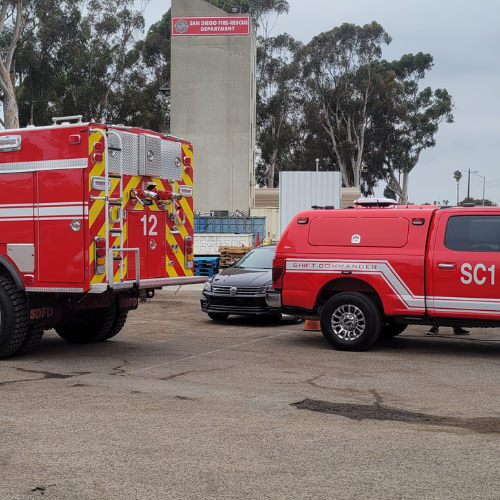
California public safety and government agencies operate across one of the most diverse communications environments in the country. Dense cities, mountain communities, deserts, coastal regions, wildfire zones and remote stretches of highway can all create very different connectivity conditions.
A network that performs well in one part of the state may be limited somewhere else. For agencies responsible for emergency response, public safety fleets, field operations and continuity of operations, that makes access to more than one connectivity option increasingly important.
Public safety organizations and government agencies are therefore taking a closer look at Low Earth orbit satellite connectivity as another way to extend broadband access beyond the reach or reliability of traditional terrestrial networks.
But the decision is not simply about choosing a satellite terminal. Agencies also need to consider how the service will be deployed, managed, installed, supported and procured across the organization.
Why California Agencies Are Looking at LEO Satellite Connectivity
Modern government and public safety operations increasingly depend on IP-based applications in the field. CAD, mapping, situational awareness, video, cloud applications, mobile command systems, messaging, telemedicine and other operational tools all depend on dependable connectivity.
That can become more difficult as teams move into environments where terrestrial communications are limited, damaged or congested.
- Rural and mountainous communities
- Wildfire response zones
- Remote highways and transportation corridors
- Temporary incident command locations
- Disaster recovery sites
- Areas affected by damaged terrestrial infrastructure
- Locations experiencing commercial cellular congestion
- Field operations beyond dependable terrestrial coverage
LEO satellite networks provide another path to the internet without depending exclusively on nearby cellular towers, cable or other local terrestrial infrastructure.
For agencies working across California's varied geography, that can create greater flexibility in how field connectivity is planned.
Where California Public Agencies Can Use LEO Satellite
Emergency Response Vehicles
Add a space-based connectivity path to police vehicles, fire apparatus, ambulances, emergency management vehicles and mobile command platforms.
Incident Command
Establish internet access at temporary command posts, staging areas and other locations where wired infrastructure may not be available.
Disaster Response
Support emergency and recovery operations when terrestrial infrastructure is damaged, congested or unavailable.
Remote Government Operations
Extend connectivity to public works, transportation, inspection, utility and other teams working beyond reliable terrestrial broadband.
Connected Public Safety Vehicles
Police vehicles, fire apparatus, ambulances, emergency management vehicles and command platforms increasingly function as connected field workspaces.
Internet connectivity can support CAD and dispatch information, AVL, mapping, video, cloud applications, incident documentation and situational awareness platforms.
Adding satellite connectivity can give agencies another available path when vehicles move outside dependable terrestrial coverage. Agencies evaluating connected fleets can learn more about IP Access mobile connectivity solutions for public safety and field operations.
Emergency Operations and Incident Command
Emergency operations do not always take place near facilities with reliable broadband. Temporary command locations may need to be established near wildfires, evacuation centers, staging areas, temporary government facilities or remote incident locations.
Portable LEO satellite systems can help establish an internet connection without waiting for permanent terrestrial infrastructure.
Agencies that need rapidly deployable communications can also explore quick-deployment connectivity solutions designed for temporary command and field operations.
Wildfire and Disaster Response
California agencies have to plan for emergencies in which local communications infrastructure may be unavailable, damaged or heavily congested.
Wildfires, earthquakes, floods, severe storms and other incidents can quickly change the communications environment. Mobile and portable satellite systems can provide another option while teams operate beyond terrestrial coverage or while local infrastructure is being restored.
Remote Government and Field Operations
Not every satellite deployment is emergency driven. Public works crews, utilities, transportation departments, inspectors, environmental teams and other government personnel may regularly work in locations where dependable broadband is difficult to obtain.
LEO satellite connectivity can extend access to cloud applications, field data, mapping, communications platforms and other IP-based resources in locations that are otherwise difficult to connect.
LEO Satellite Is More Than a Backup Connection
Satellite connectivity has traditionally been discussed as something agencies activate only after another network stops working. Modern public safety connectivity can take a broader approach.
Cellular networks may perform well in one location while satellite performs better somewhere else. Network conditions can change as vehicles move, incidents expand or commercial systems become congested.
IP Access International's SuperGIG™ managed connectivity platform is designed around network diversity, bringing available terrestrial and space-based connectivity paths into one managed environment.
That can allow agencies to incorporate LEO satellite into a broader connectivity architecture rather than treating it as an isolated piece of hardware.
Starlink, Eutelsat OneWeb and LEO Network Options
California agencies evaluating LEO satellite connectivity have more choices than they did only a few years ago.
Starlink and Eutelsat OneWeb are examples of Low Earth orbit satellite networks that can support broadband connectivity in mobile, portable and fixed environments depending on the application and selected equipment.
IP Access International is an Authorized Starlink Reseller and an Authorized Eutelsat OneWeb Distribution Partner, helping agencies evaluate hardware, service and deployment models appropriate for their operational requirements.
For some deployments, one LEO network may be sufficient. For others, combining satellite with cellular connectivity or additional network options may provide a stronger operational architecture.
Managing LEO Satellite Across a Government Agency
Buying a single satellite terminal is relatively straightforward. Managing satellite connectivity across vehicles, departments, teams and facilities is different.
Larger deployments introduce questions around activation, service plans, data usage, hardware, installation, troubleshooting, network integration and ongoing support.
Agencies should think early about who will manage the connection after equipment reaches the field. IP Access provides managed satellite service, hardware, integration, professional installation and 24/7/365 U.S.-based network support for mission-critical organizations.
That allows agencies to work with one connectivity partner across the deployment rather than treating hardware, service and support as completely separate projects.
A More Direct Procurement Path for California Agencies
Technology is only one part of a government connectivity deployment. Procurement matters too.
California public agencies may be able to access IP Access International through established statewide contract vehicles for communications technology, satellite broadband service, hardware and related solutions.
For eligible government and public safety organizations, these existing procurement options can provide a more direct way to purchase LEO satellite connectivity without having to develop an entirely new purchasing path for each deployment.
Agencies researching satellite broadband, Starlink, LEO service or mobile connectivity should consider both the technical requirements and the available procurement path early in the process.
Explore IP Access statewide and cooperative contracts to learn more about available purchasing options for government and public safety organizations.
Hardware Is Only Part of a Successful Deployment
Satellite terminals tend to receive most of the attention, but successful deployments involve much more than the antenna.
- Antenna selection and placement
- Vehicle or facility installation
- Cable routing
- Power planning
- Environmental considerations
- Router and networking equipment
- Cellular integration
- Device management
- Service planning
- Data management
- Ongoing support and troubleshooting
IP Access provides managed Starlink hardware and service, professional installation and broader connectivity integration so public agencies can approach the deployment as a complete communications system rather than a collection of individual components.
Planning for California's Communications Environment
California presents a unique combination of terrain, population density, disaster exposure and operational scale. That makes it difficult for any single network to be the right answer everywhere.
LEO satellite connectivity gives public safety and government agencies another way to extend broadband access into vehicles, emergency deployments, field operations and remote locations.
The strongest strategy, however, is often broader than satellite alone. Agencies should understand where terrestrial networks perform well, where satellite adds value, how multiple networks can work together, how deployments will be supported and how the technology can be procured efficiently.
IP Access International helps California public safety and government organizations design, deploy, install and manage terrestrial and space-based connectivity for mission-critical operations.
Planning a LEO Satellite Deployment in California?
Talk with IP Access about Starlink, Eutelsat OneWeb, mobile connectivity, portable systems, installation, managed service and available statewide procurement options.
LEO Satellite Connectivity for California Agencies
Common questions from government and public safety organizations evaluating satellite broadband and mobile connectivity.
Can California government agencies purchase LEO satellite connectivity?
Yes. Public agencies can procure LEO satellite hardware and service through available purchasing methods, including established statewide and cooperative contract vehicles where eligibility and contract scope apply.
Can public safety agencies in California use Starlink?
Yes. Starlink can support public safety vehicles, command operations, emergency deployments, temporary facilities and field teams depending on the operational environment, hardware and selected service.
What is LEO satellite connectivity used for in public safety?
LEO satellite connectivity can support applications such as CAD access, mapping, situational awareness, video, messaging, cloud platforms and other IP-based resources used in vehicles, command locations and field operations.
Can LEO satellite work with cellular connectivity?
Yes. Satellite and cellular networks can be incorporated into a broader multi-network architecture. IP Access SuperGIG™ is designed to bring available terrestrial and space-based network options together within a managed connectivity platform.
Can LEO satellite be installed on government vehicles?
Depending on the selected equipment and operating requirements, LEO satellite hardware can be integrated into public safety and government vehicles. IP Access provides professional installation and network integration services.
Does IP Access support California government agencies?
Yes. IP Access works with public safety and government organizations and offers satellite, terrestrial and managed multi-network connectivity, along with hardware, installation and 24/7/365 U.S.-based network support.