
Beyond Backup: The New Role of Satellite Communications in Public Safety
Satellite communications are moving beyond their traditional role as an emergency fallback, giving public safety agencies another way to keep vehicles, teams, applications, and communications connected wherever operations take them.
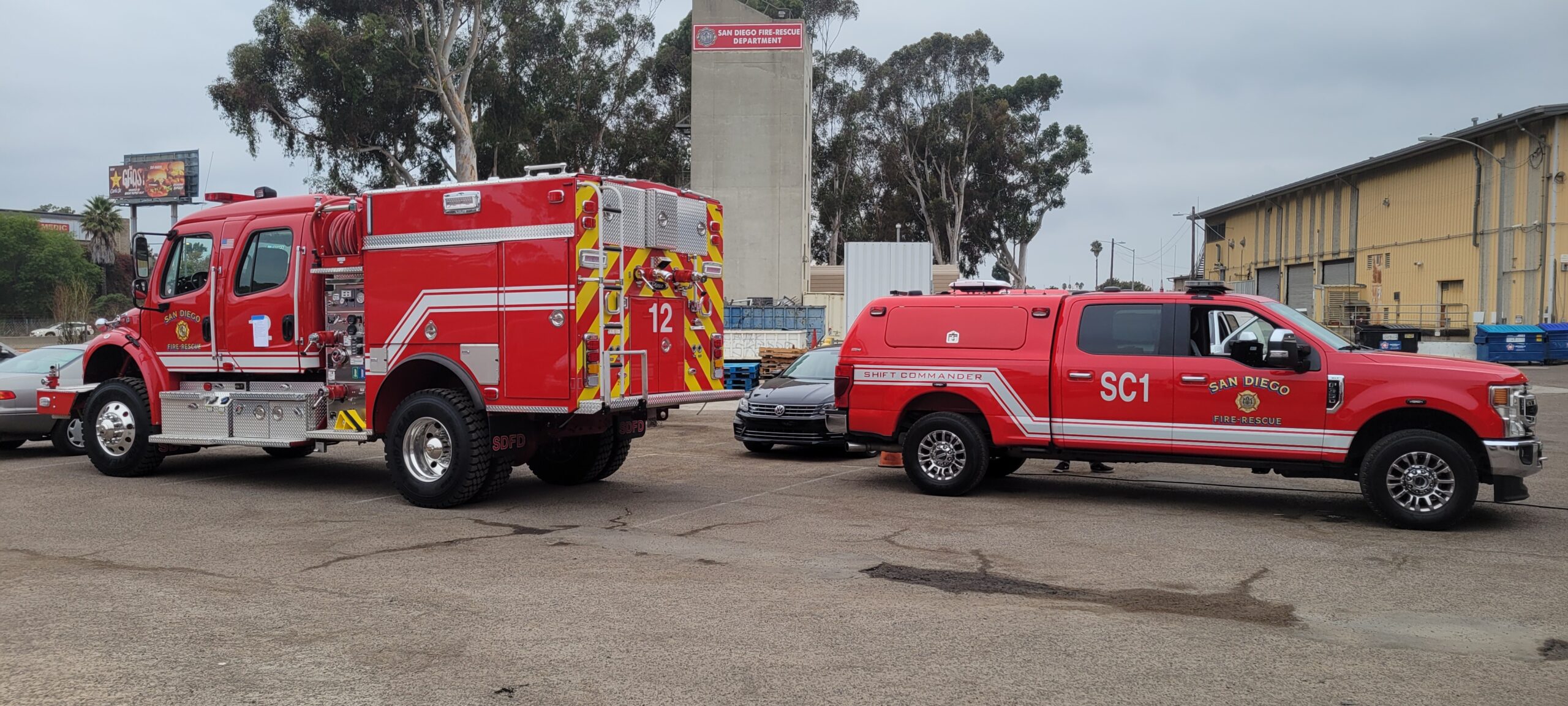
For decades, satellite communications played a familiar role in emergency response: when terrestrial infrastructure failed, SATCOM provided another way to communicate.
That role is changing.
Today’s public safety agencies operate in an environment where connectivity supports far more than basic communications. Computer-aided dispatch (CAD), automatic vehicle location (AVL), mapping, video, cloud-based applications, situational awareness platforms, IP-based communications, and other operational tools increasingly depend on reliable access to the network.
That broader communications environment is reflected in CISA’s National Emergency Communications Plan, which emphasizes resilient and interoperable emergency communications and the ability for public safety organizations to communicate and share information across technologies.
At the same time, emergency operations routinely move beyond the boundaries of traditional infrastructure.
Wildfires. Hurricanes. Search and rescue operations. Large-scale events. Remote incidents. Damaged infrastructure. Congested cellular networks.
It is no longer simply, “Do we have satellite communications if something goes wrong?”
Increasingly, agencies are asking a different question: How can satellite connectivity become part of the way we operate every day?
That shift is transforming the role of satellite communications in public safety connectivity.
From Backup Communications to Operational Connectivity
Traditional emergency communications strategies were often built around individual networks and clearly defined coverage areas.
But public safety operations rarely stay inside those boundaries.
A patrol vehicle can move from a dense urban environment into an area with limited cellular coverage. A fire crew may respond to an incident miles beyond established infrastructure. An emergency management team may establish a temporary command location where connectivity is limited or nonexistent.
Modern Low Earth Orbit (LEO) satellite networks give agencies another path to connectivity in these environments.
More importantly, satellite communications do not necessarily need to operate as an isolated system.
When satellite connectivity is integrated with cellular and other available networks, agencies can build a broader communications environment capable of following personnel, vehicles, and operations into the field.
Satellite is no longer only the network you turn to when everything else fails. It can be one of the networks supporting the mission from the beginning.
The Connected Public Safety Vehicle Is Becoming Part of the Network
One of the clearest examples of this transformation is happening inside public safety fleets and connected vehicles.
Police vehicles, fire apparatus, ambulances, command vehicles, and emergency response units are becoming increasingly connected operational platforms.
When the vehicle maintains reliable IP connectivity, it becomes more than transportation.
It becomes a mobile extension of the agency’s communications network.
Adding satellite connectivity to that environment can significantly expand where those capabilities remain available.
Instead of assuming applications will stop working when cellular coverage disappears, agencies can design vehicle connectivity around multiple available network paths.
The objective is not simply putting a satellite terminal on a vehicle. The objective is keeping the applications and communications inside that vehicle connected.
Extending Operations Beyond Traditional Coverage
Satellite communications also give agencies new ways to think about where they can establish operations.
A rapidly deployable connectivity solution can help establish communications at an incident command post, staging area, shelter, remote fire operation, disaster recovery site, temporary communications center, or another location without dependable terrestrial service.
With compact LEO terminals and portable deployment systems, establishing connectivity in the field has become considerably more practical.
For emergency managers and first responders, that creates more flexibility in how and where resources can be deployed.
Satellite Can Help Extend More Than Internet Access
One of the most important developments in public safety connectivity is the convergence of IP networks and traditional communications systems.
A reliable IP connection can support more than laptops, applications, and video. It can also provide another path for communications.
During public safety field testing, IP Access International demonstrated how a reliably connected vehicle could help extend existing radio communications using IP connectivity.
Extend the reach.
The idea is not to replace an agency’s existing land mobile radio investment. IP connectivity can help augment it by providing another path between field personnel and agency communications infrastructure.
The Opportunity Is Multiple Networks Working Together
No single network is perfect everywhere.
Cellular networks provide tremendous coverage and performance, but geography, congestion, infrastructure damage, and changing network conditions can affect availability.
Satellite networks dramatically expand the geographic footprint of connectivity, but they have their own operational considerations.
Strong public safety connectivity strategies recognize this reality.
Rather than asking agencies to choose between terrestrial or satellite communications, the better question is: How do we use the networks available to us together?
Bringing Satellite and Terrestrial Connectivity Together
That is the idea behind SuperGIG™, IP Access International’s managed connectivity platform.
SuperGIG™ can bring together multiple connectivity paths—including LEO satellite and LTE/5G—into a managed environment designed around the needs of mission-critical operations.
Instead of treating each connection as a separate service that personnel must manage independently, the goal is to make the underlying networks work together while giving the agency a simpler operational experience.
Multiple networks. One connection. One support team.
Satellite Communications Are Becoming Easier to Deploy
Hardware is also helping drive this transformation.
Modern LEO satellite terminals are smaller, flatter, and easier to integrate into vehicles and portable systems than many previous generations of satellite equipment.
Solutions such as Starlink make it possible to consider satellite connectivity across use cases that may not previously have justified traditional SATCOM equipment. Starlink also offers business and mobility connectivity options designed for operations beyond traditional fixed locations.
As the physical footprint of satellite equipment decreases, the number of places where agencies can practically deploy it continues to grow.
Hardware Alone Does Not Create Resiliency
Buying a satellite terminal is relatively straightforward.
Building an operational communications strategy around satellite is different.
Agencies still need to consider service plans, data usage, network management, installation, power, vehicle integration, technical support, and how satellite connectivity interacts with their existing communications environment.
For agencies deploying multiple terminals across vehicles, teams, and locations, those considerations become even more important.
IP Access International helps public safety organizations bring together satellite hardware, managed service, installation, network management, terrestrial connectivity, and 24/7/365 U.S.-based network support.
As an Authorized Starlink Reseller and Authorized Eutelsat OneWeb Distribution Partner, IP Access can help agencies evaluate LEO connectivity as part of a broader communications strategy rather than treating satellite as a standalone purchase.
Through Eutelsat’s OneWeb LEO constellation, agencies and mission-critical organizations have another satellite connectivity option that can be integrated alongside terrestrial communications and other available network paths.
Rethinking Emergency Communications Infrastructure
Perhaps the biggest impact of modern satellite communications is not a particular terminal, satellite constellation, or speed.
It is the ability to rethink infrastructure.
Historically, expanding communications coverage could require substantial fixed infrastructure.
Today, some of that capability can travel with the responder.
A connected vehicle can carry multiple network paths. A portable deployment kit can establish an IP connection at a temporary location. A satellite terminal can bring connectivity into an area where terrestrial infrastructure does not exist.
And IP-based communications can help extend the usefulness of systems agencies already own.
That does not eliminate the need for traditional public safety communications infrastructure.
It gives agencies another layer to build around it.
The Future of Public Safety Connectivity Is Broader Than Any Single Network
Public safety agencies will continue to rely on radio systems, cellular networks, fixed infrastructure, satellite communications, and emerging technologies.
The transformation is happening in how those systems work together.
Satellite communications are becoming smaller, faster, easier to deploy, and increasingly integrated into everyday operations.
That means the next generation of emergency communications may not be defined by a single network at all.
It will be defined by an agency’s ability to maintain access to the applications, information, and communications its personnel need, regardless of where an incident occurs or which individual network happens to be available.
The opportunity is not simply having another network. It is having another way to keep the mission connected.
Where Does Satellite Fit Into Your Communications Strategy?
IP Access International helps public safety agencies evaluate satellite, cellular, vehicle connectivity, portable deployment, and managed network options around the operational challenges they are trying to solve.
Talk to an IP Access Expert