
BLOG
Extending Land Mobile Radio (LMR) Coverage Beyond Tower Limits
A practical approach to keeping teams connected in the field
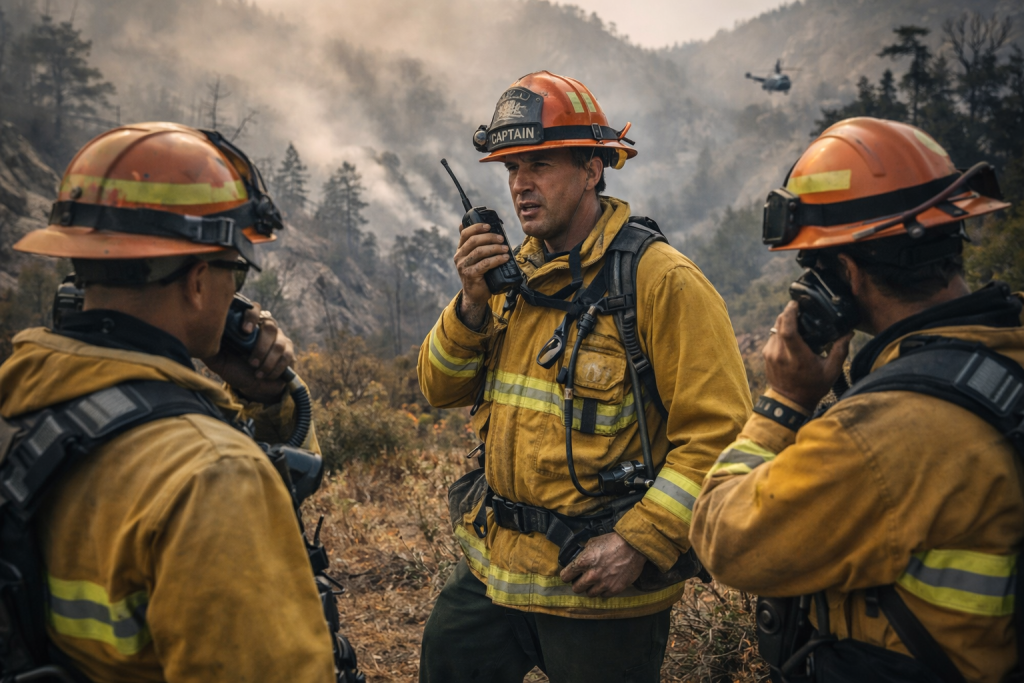
You don’t need to replace your radios—you just need to extend them.
LMR Works—Until It Doesn’t
For decades, Land Mobile Radio (LMR) has been the backbone of communication for public safety, utilities, and field operations.
It’s reliable. It’s trusted. It’s familiar.
But it has one major limitation:
👉 Coverage is tied to towers.
Once users move beyond that coverage area—whether in rugged terrain, rural environments, or disaster zones—communication can degrade or disappear entirely.
And when communication drops, so does coordination.
The Reality of Coverage Gaps
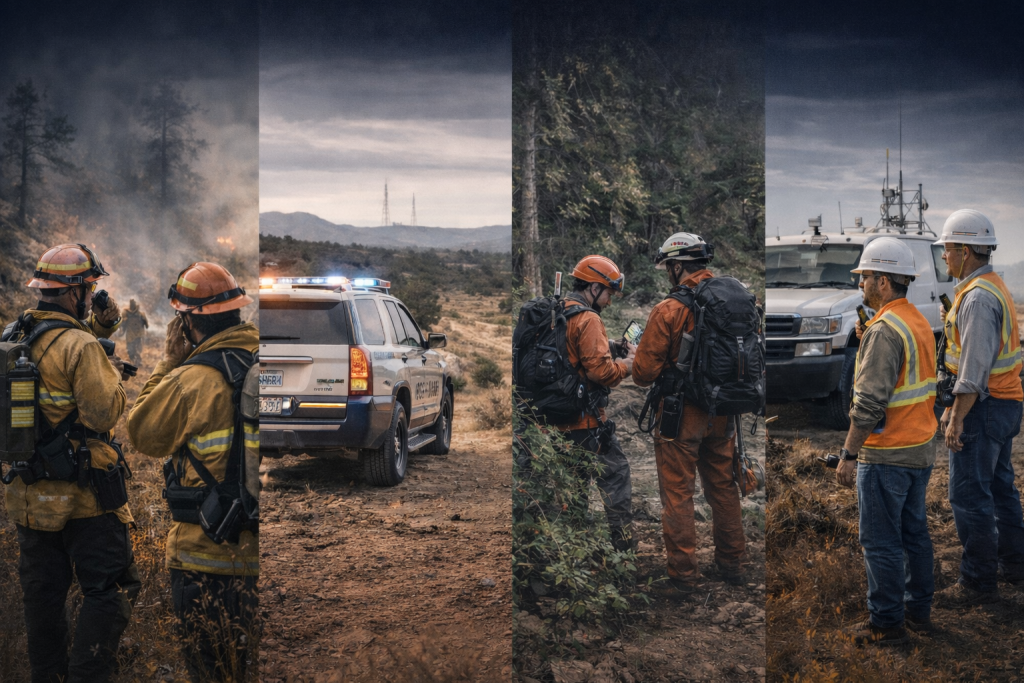
This isn’t a rare edge case—it’s something agencies deal with every day:
- Wildland firefighters operating deep in mountainous terrain
- Law enforcement working outside jurisdictional tower coverage
- Search and rescue teams in remote environments
- Utility crews responding in off-grid locations
In each case, the problem is the same:
👉 The radio works. The network doesn’t reach.
Extending Coverage Without Replacing Radios
Traditionally, solving this meant:
- Building more towers
- Deploying repeaters
- Or accepting the limitation
But there’s another approach:
👉 Extend LMR using IP connectivity
Instead of replacing radios or rebuilding infrastructure, agencies can expand the reach of their existing systems.
How It Works
At a high level, the concept is simple:
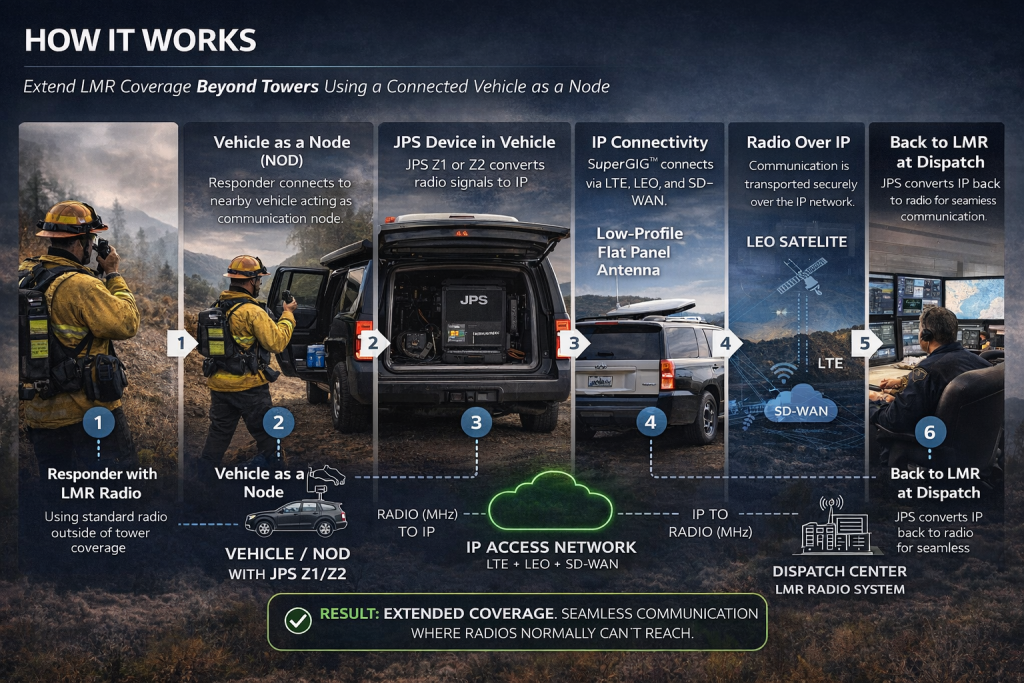
- A responder uses their standard LMR radio
- They connect to a nearby vehicle acting as a communication node
- That vehicle is equipped with:
- A JPS interoperability device (Z1 or Z2)
- SuperGIG™ connectivity (LTE, LEO satellite, SD-WAN)
SuperGIG™ ensures that communication is intelligently routed across available networks, maintaining connectivity even in challenging environments.
- The system converts:
- Radio (MHz) → IP → Radio (MHz)
- Communication is delivered back to dispatch or command centers
From Vehicle to Network Node
This is where things get interesting.
Instead of relying solely on fixed infrastructure, a properly equipped vehicle becomes a:
👉 Network Operational Device (NOD) powered by SuperGIG™
That means:
- It can receive local radio traffic
- Convert it to IP
- Transport it over available networks
- Deliver it anywhere
In effect, the vehicle acts like a portable extension of the radio network.
More Than Interoperability
JPS is widely known for radio interoperability—connecting different frequencies, agencies, and systems.
But in this architecture, it plays another critical role:
👉 Protocol conversion
- Converting LMR (MHz) into IP traffic
- Then converting it back into LMR at the destination
This allows radio communications to travel far beyond traditional tower-based limits.
What This Enables in the Field
The impact is straightforward—but powerful:
- Radios work outside of coverage areas
- Teams stay connected in remote environments
- Communication reaches dispatch in real time
- SuperGIG™ ensures reliable transport of communication across any available network
- No need to replace existing radio systems
It’s not about changing how teams communicate—it’s about ensuring they can keep communicating wherever they are.

Real-World Applications
Wildland Fire Operations
Maintain communication across large, rugged fire zones
Rural & Tribal Law Enforcement
Extend coverage beyond tower infrastructure
Search & Rescue Missions
Stay connected in unpredictable terrain
Utilities & Field Crews
Enable communication in remote service areas
A Shift in Thinking
For years, radio coverage has been defined by fixed infrastructure.
But with the combination of:
- JPS interoperability technology
- SuperGIG™ IP-based connectivity (LTE, LEO, SD-WAN)
That model changes.
👉 Coverage is no longer limited to where towers exist
👉 It can move with the mission
You don’t need to replace your radios.
You don’t need to rebuild your network.
You just need to extend it—with SuperGIG™ powering the connection.
Want to See How This Would Work in Your Environment?
Request a connectivity and coverage assessment to explore how your existing radio system can be extended using IP.