
Portable radio
The responder communicates using the radio and workflow already familiar to the agency.
Give responders a path back to dispatch when terrain, distance, or damaged infrastructure takes them beyond traditional tower coverage. IP Access connects the radio systems agencies already trust to resilient terrestrial and space-based networks.
LMR remains essential to public safety, but fixed radio infrastructure has physical limits. Crews can move into canyons, rural roads, concrete structures, disaster zones, and other environments where the nearest tower is no longer enough.
The answer is not always another tower—or a replacement for the radios already in use. By bridging local radio traffic to available IP connectivity, an agency can extend communications back to dispatch, command, neighboring agencies, or remote teams.
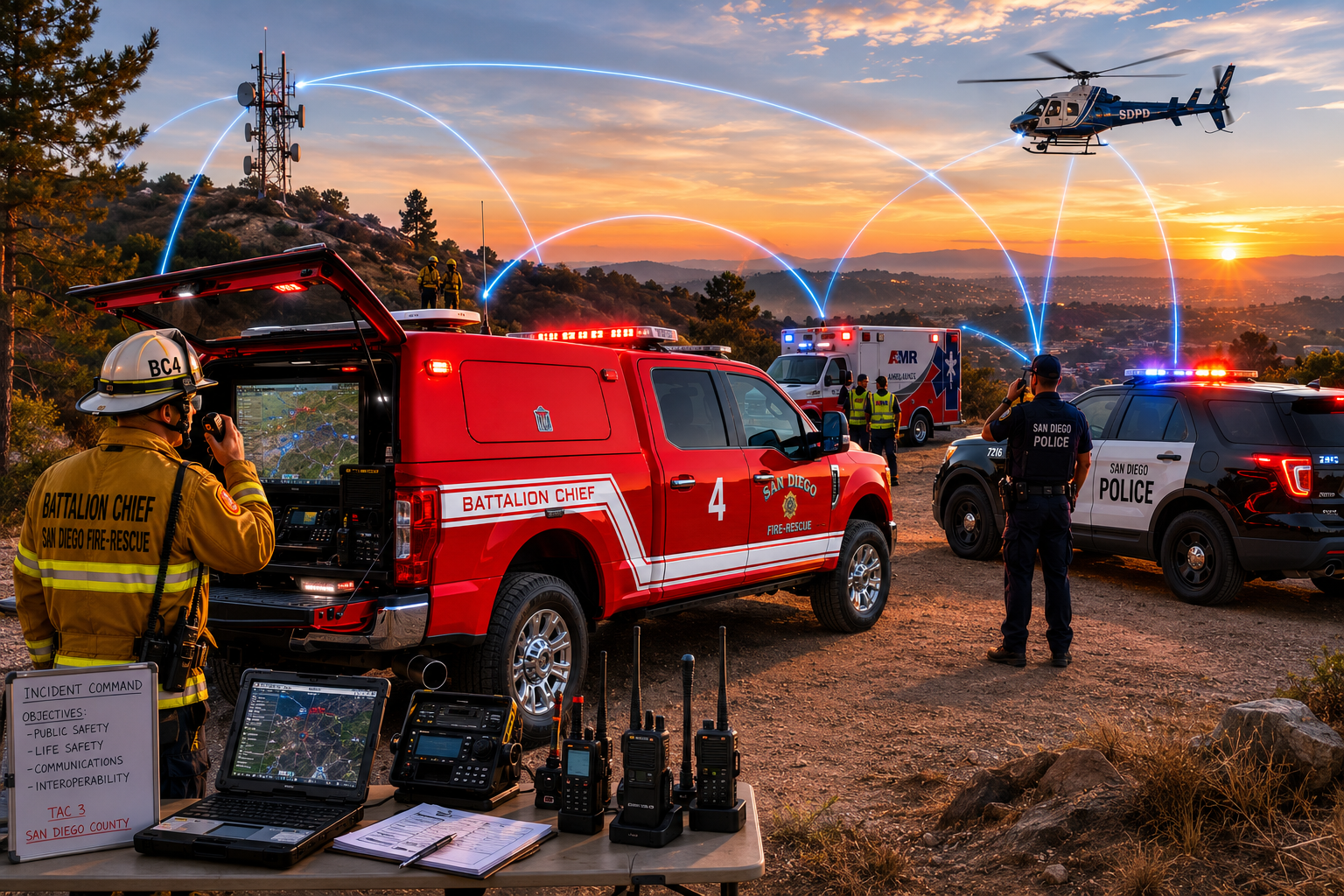
The responder keeps using the portable radio. Behind the scenes, a gateway and managed connectivity environment help move that communication beyond the local coverage boundary.
The responder communicates using the radio and workflow already familiar to the agency.
A vehicle-based or deployable gateway bridges local radio traffic into the IP environment.
Available LTE, 5G, LEO satellite, private wireless, or wireline paths are evaluated in real time.
Voice reaches dispatchers, command staff, remote radio resources, and authorized partner agencies.
The exact architecture depends on existing radio systems, talk groups, dispatch requirements, available networks, security policies, and the operating environment.
During the MACC911 field test, a connected public-safety vehicle combined a radio gateway with blended terrestrial and space-based connectivity. Network paths were taken down sequentially until only Starlink remained. The live radio call did not drop.
The test demonstrated a practical idea: a reliably connected vehicle can become part of the critical communications network—supporting radio extension as well as CAD, AVL, video, and other operational applications.
One vehicle. Multiple networks. A wider communications footprint.
Observed field-test distance is not a guaranteed range. Performance varies based on terrain, structures, equipment, configuration, interference, and operating conditions.
A fire apparatus, patrol vehicle, ambulance, battalion chief vehicle, utility truck, or mobile command unit can create a local connectivity bubble for personnel operating nearby.
With the right radio interface, antenna system, network hardware, installation, and managed service, that vehicle can bridge field teams to resources that may be many miles away.
Together, JPS interoperability technology and SuperGIG™ managed connectivity can bridge existing radio systems and carry communications across terrestrial and space-based networks.
JPS gateways, controllers, and RoIP technology connect radios, dispatch resources, SIP, VoIP, PoC, and other communication systems.
SuperGIG™ brings selected cellular, LEO satellite, and other IP connections into one managed network with quality-based intelligence and one support relationship.
Coverage extension is valuable anywhere personnel must communicate across distance, difficult terrain, obstructed structures, infrastructure loss, or multiple agency systems.
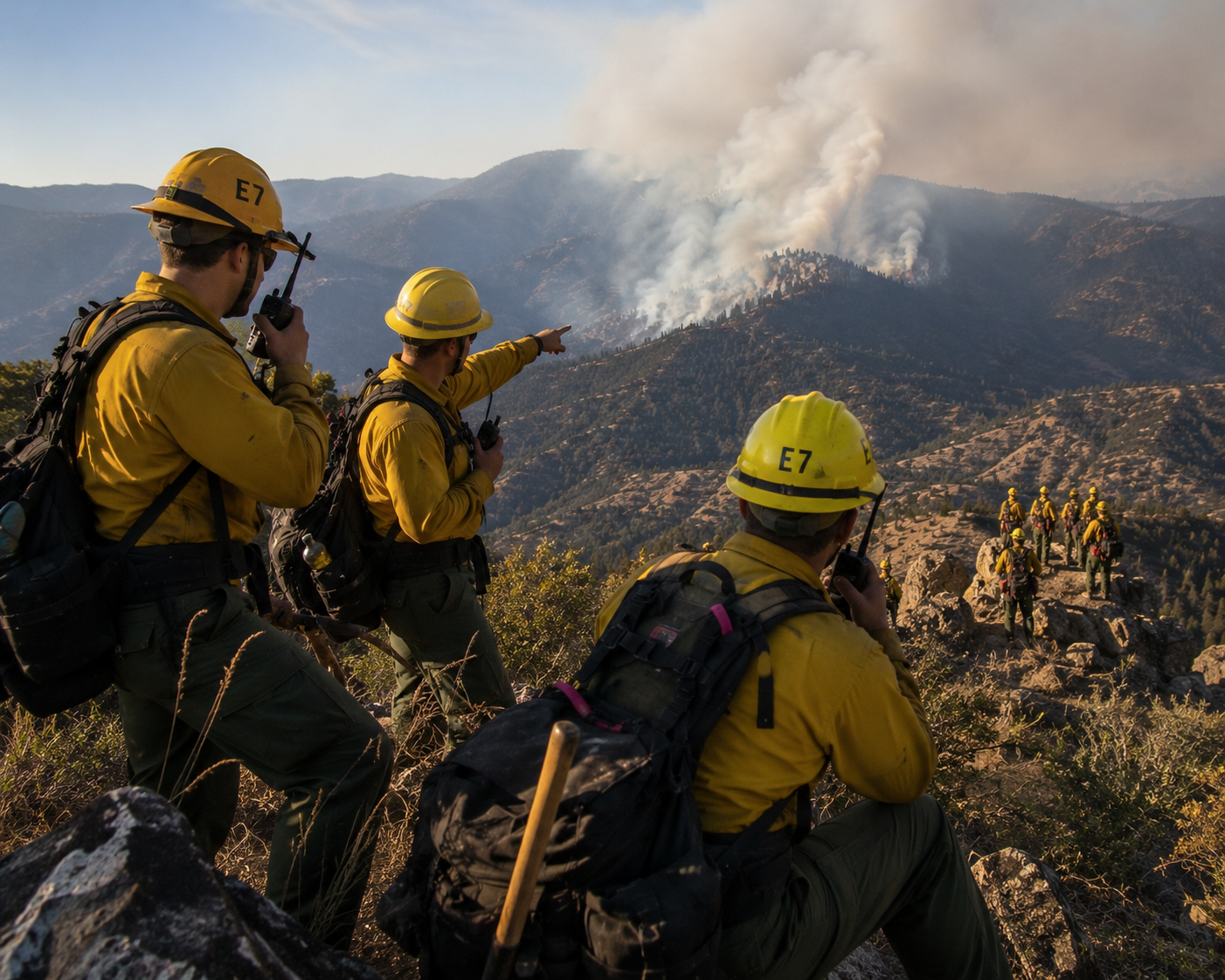
Connect crews operating across changing fire lines, canyons, mountains, and remote access roads.
Support fire, EMS, and law enforcement across large jurisdictions and areas beyond fixed tower reach.
Extend communications between field teams, staging areas, command, and dispatch in unpredictable environments.
Restore a communications path when local infrastructure is damaged, unavailable, or congested.
Bridge participating agencies, radio systems, command posts, and field personnel during shared operations.
Keep repair, inspection, and response crews connected across remote or storm-damaged service areas.
Reach teams working in basements, hardened facilities, or buildings where direct LMR coverage is limited.
Connect radios, dispatch resources, broadband users, and mission applications from the scene.
Technology alone does not create a resilient communications system. The radio interface, network paths, vehicle hardware, installation, configuration, security, monitoring, and support must work as one operational environment.
Build a Coverage-Extension PlanStart with existing radio systems, dispatch operations, field conditions, participating agencies, and the actual coverage problem.
Select the radio interface, connectivity, antennas, network equipment, security, and deployment model as one design.
Configure, install, test, and commission systems for vehicles, facilities, command posts, and deployable kits.
Manage connectivity and support through one provider and a U.S.-based NOC available 24/7/365.
Every deployment is different, but the objective is consistent: extend the communications agencies already depend on without making the field experience more complicated.
Yes. A connected vehicle, fixed site, or deployable kit can serve as a local radio extension point. A gateway bridges radio traffic into an IP network so communications can reach dispatch, command, a remote radio resource, or another authorized system.
No. The goal is to augment the agency's existing investment. Responders can continue using familiar radios and procedures while IP connectivity extends access beyond the normal coverage boundary.
Yes. Once appropriately bridged to IP, radio communications can travel over properly designed cellular, LEO satellite, private wireless, microwave, fiber, or other approved IP paths. The final design depends on latency, security, availability, and agency requirements.
JPS interoperability technology connects radio and voice systems to the IP environment. SuperGIG™ provides the managed network across selected terrestrial and space-based connections. Together, they can support extended reach and cross-system communications.
The same vehicle network can support authorized operational applications such as CAD, AVL, mapping, video, telematics, incident-management tools, and a local Wi-Fi connectivity bubble, depending on the design and agency policy.
Yes. IP Access can provide architecture, hardware selection, configuration, white-glove installation, testing, training, managed connectivity, and ongoing support for fixed, mobile, and deployable systems.
Tell us where teams lose communications, what systems are already in place, and how responders need to operate. We’ll help design a practical path to extend the reach.