
Starlink on Ambulances: Keeping EMS Applications Connected
Ambulances have become mobile data environments. Adding Starlink to an EMS vehicle can extend broadband connectivity beyond the reach of traditional infrastructure—but dependable fleet connectivity requires more than installing a satellite terminal.
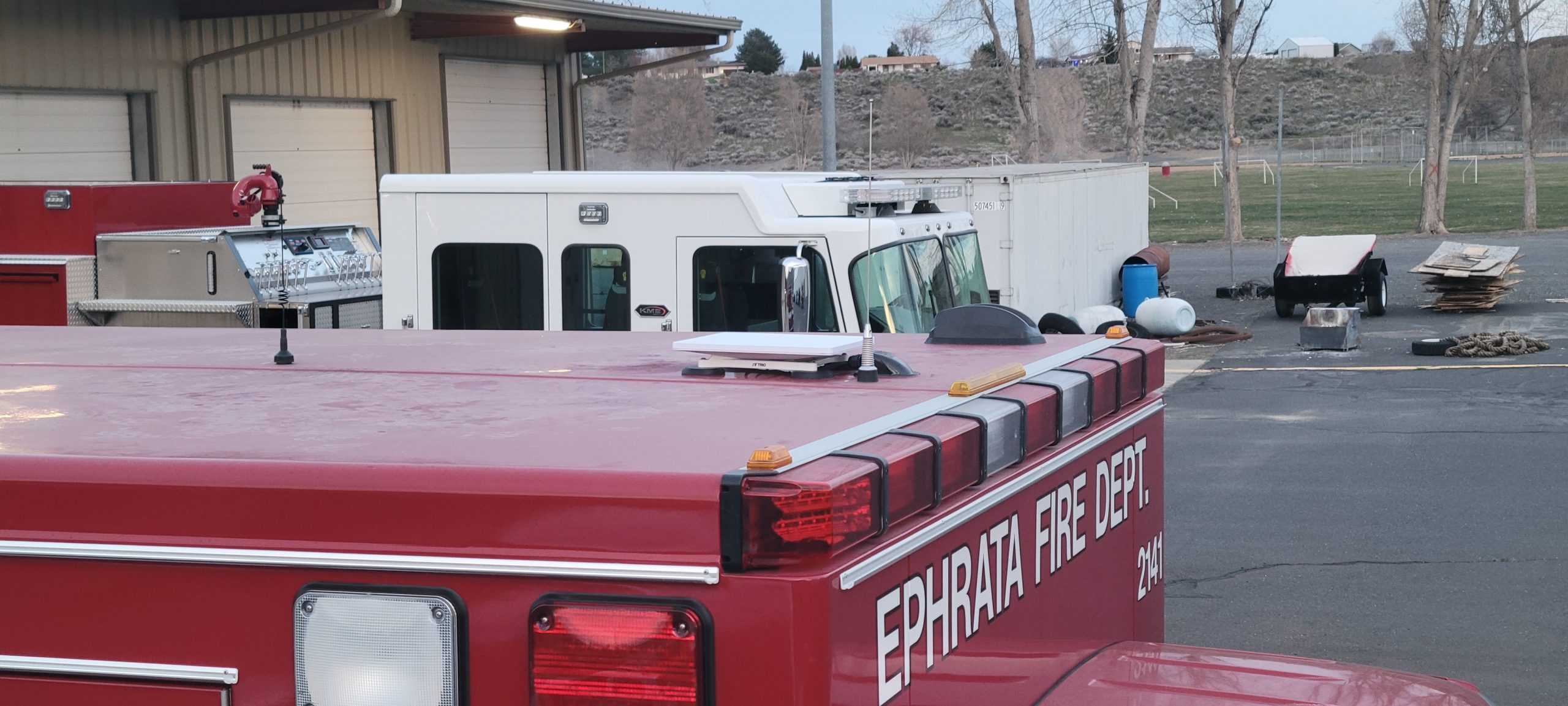
A modern ambulance is a mobile treatment room, communications center and extension of the hospital. Crews may depend on computer-aided dispatch, electronic patient care reporting, automatic vehicle location, mapping, hospital notifications, secure messaging and telemedicine throughout the response.
That growing dependence on connected applications makes fleet connectivity an operational requirement—not simply a convenience. When a vehicle travels beyond cellular coverage, enters congested network conditions or responds where terrestrial infrastructure has been disrupted, application performance can be affected at the exact moment responders need it most.
Starlink gives EMS agencies another broadband path by connecting vehicles through a low Earth orbit satellite network. When professionally installed and integrated with cellular and other available networks, it can become an important part of a more resilient fleet communications strategy.
The Connected Ambulance
Ambulances Now Depend on Continuous Data
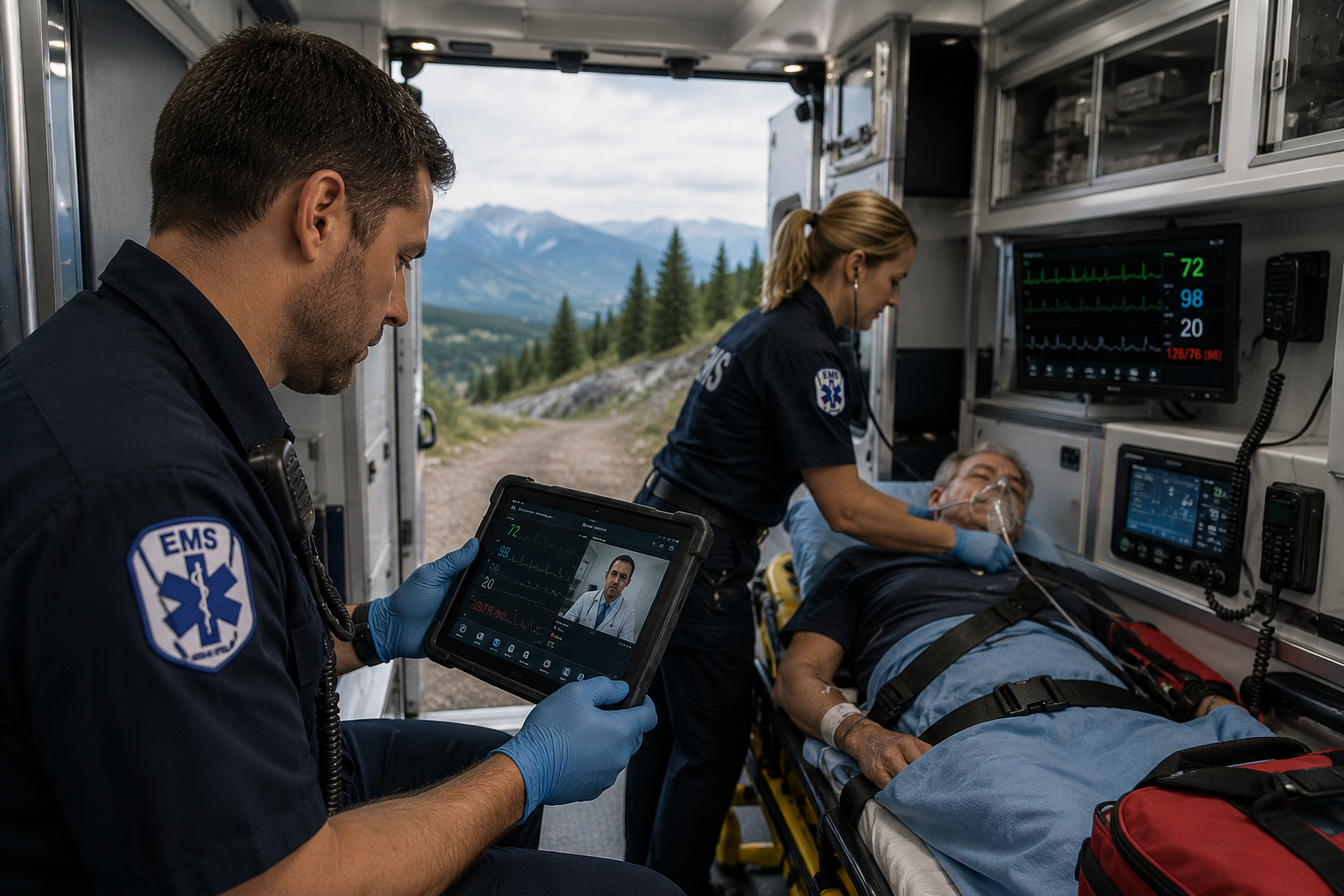
EMS vehicles carry an expanding collection of connected devices and cloud-based applications. Dispatch information may be updated while a unit is en route. Patient records may need to be completed or transmitted from the field. Hospitals may need information before the ambulance arrives.
The federal Office of Emergency Medical Services has also published resources addressing telemedicine and connected care in the prehospital environment. These evolving applications depend on a communications path capable of supporting data, voice and video outside a traditional hospital setting.
- Real-time dispatch and incident updates
- Patient documentation and data transmission
- Fleet location and vehicle status
- Secure access to agency systems
- Coordination with hospitals and specialists
Connectivity interruptions do not necessarily stop an ambulance from responding, but they can limit visibility, delay information sharing and force crews to work around unavailable applications.
Extending Fleet Coverage
Why EMS Agencies Are Evaluating Starlink
Cellular remains an important connectivity tool for public safety fleets, but no single carrier provides coverage in every location. Ambulances routinely travel through rural communities, mountain corridors, coastal areas and mutual-aid jurisdictions where terrestrial coverage may change quickly.
Starlink can extend broadband connectivity beyond the practical reach of nearby cellular towers. A properly selected and installed terminal can give the vehicle another available communications path for supported applications.
- Rural and remote response areas
- Long-distance patient transport
- Wildland and wilderness incidents
- Disaster response and mutual aid
- Temporary operations away from fixed infrastructure
- Areas experiencing terrestrial service disruption
Learn more about managed Starlink solutions from IP Access and how the service can be integrated into a broader public safety communications environment.
Keeping Operations Online
Applications Supported by Reliable Fleet Connectivity
For EMS agencies, the real value of connectivity is measured by whether crews can continue using the operational tools required throughout a response.
Computer-Aided Dispatch
Receive assignments, incident notes, routing information and operational updates while units are in motion or positioned outside normal coverage areas.
Electronic Patient Care Reporting
Access and complete ePCR workflows from the field while supporting timely transfer of patient information and documentation.
AVL and Fleet Visibility
Help dispatch and command personnel maintain awareness of unit locations, availability and movement throughout the service area.
Telemedicine
Support video, voice and data connections between field personnel, medical control and remote clinical resources where agency workflows allow.
Hospital Coordination
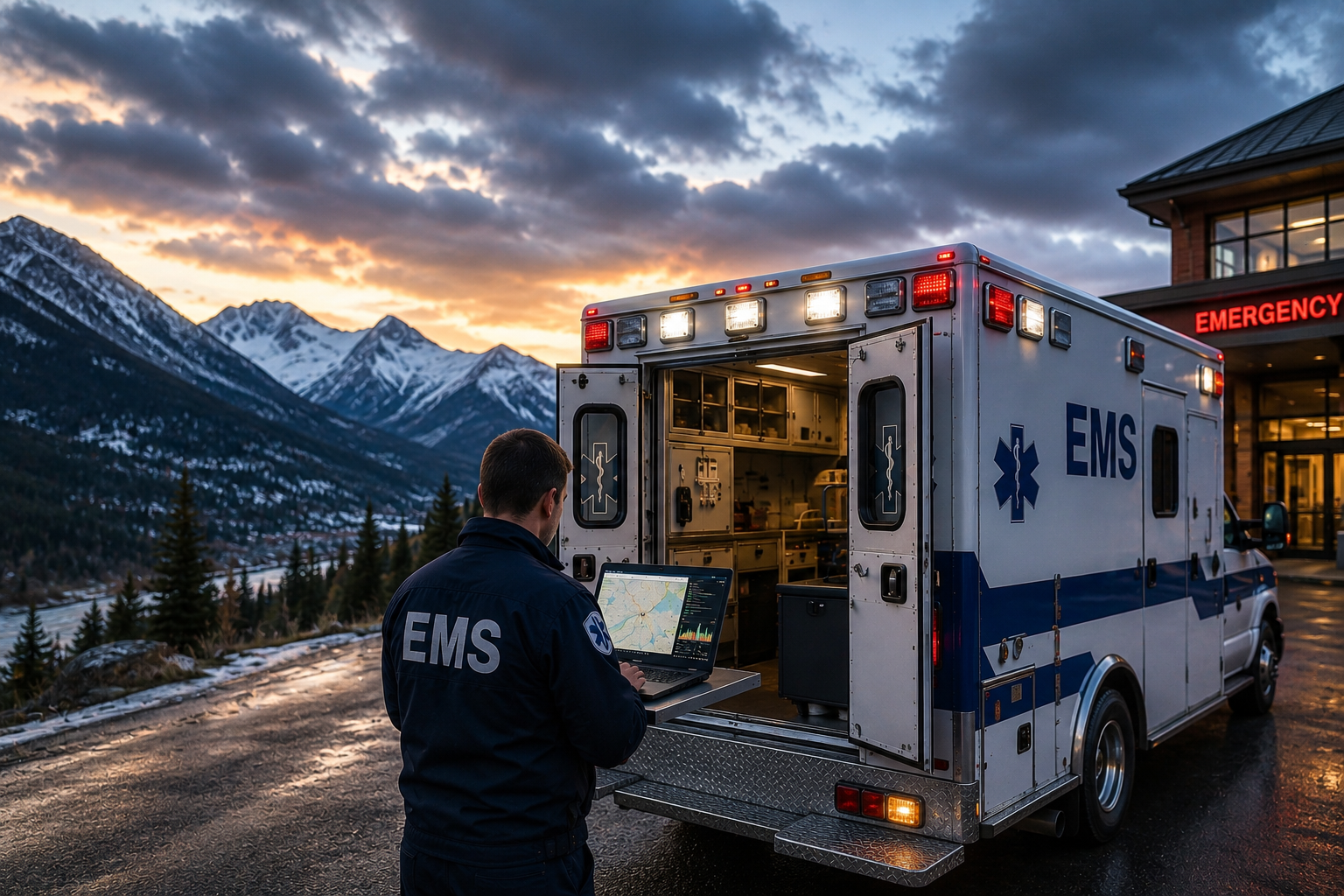
Communicate patient status and arrival information so receiving facilities can prepare resources before the ambulance reaches the hospital.
Secure Agency Access
Maintain supported VPN sessions, secure messaging, mapping and cloud-based applications used by responders and fleet personnel.
Live and Recorded Video
Provide a communications path for supported video workflows, mobile situational awareness and incident documentation.
Vehicle Diagnostics
Connect fleet management, equipment status and vehicle monitoring systems that help agencies maintain readiness.
Voice Communications
Support approved IP-based communications tools as part of the agency's broader operational communications plan.
A Multi-Network Strategy
Starlink Is a Valuable Path—Not the Entire Network
Satellite connectivity and cellular connectivity perform differently depending on the vehicle's surroundings. Starlink generally requires an appropriate view of the sky, while cellular may perform well in locations where satellite visibility is temporarily obstructed.
Tunnels, parking structures, dense tree cover and tall buildings can affect satellite performance. Cellular networks may experience their own limitations from coverage gaps, congestion, damaged infrastructure or carrier-specific outages.
The stronger approach is to make multiple communications paths available and intelligently use the connection—or combination of connections—best suited to current conditions.
Explore SuperGIG™The objective is not to force an ambulance to depend on one network. It is to create a connectivity environment that can adapt as the vehicle moves.
CISA describes emergency communications as an ecosystem requiring secure, operable and interoperable communications. Its emergency communications resources emphasize planning for continuity and resiliency rather than depending on a single technology or provider. Agencies can review the CISA Emergency Communications program for additional public safety planning resources.
Major Incidents and Mutual Aid
Fleet Connectivity When Local Infrastructure Is Under Pressure
Hurricanes, wildfires, floods, earthquakes and other major incidents can damage terrestrial infrastructure or create unusually high demand on local networks. Ambulances may also deploy well beyond their normal service area during regional mutual-aid operations.
Satellite connectivity provides a network path that is not dependent on the nearest cellular tower or local wired infrastructure. That separation can be valuable when agencies establish temporary operations or enter an affected area.
CISA's guidance on improving emergency communications resiliency through redundancies highlights how public safety organizations can incorporate redundancy into emergency communications planning.
Satellite should still be evaluated as one component of the agency's communications plan. Power, mounting, visibility, security, equipment management and alternate communications methods all remain important.
Vehicle Integration
What to Consider Before Installing Starlink on an Ambulance
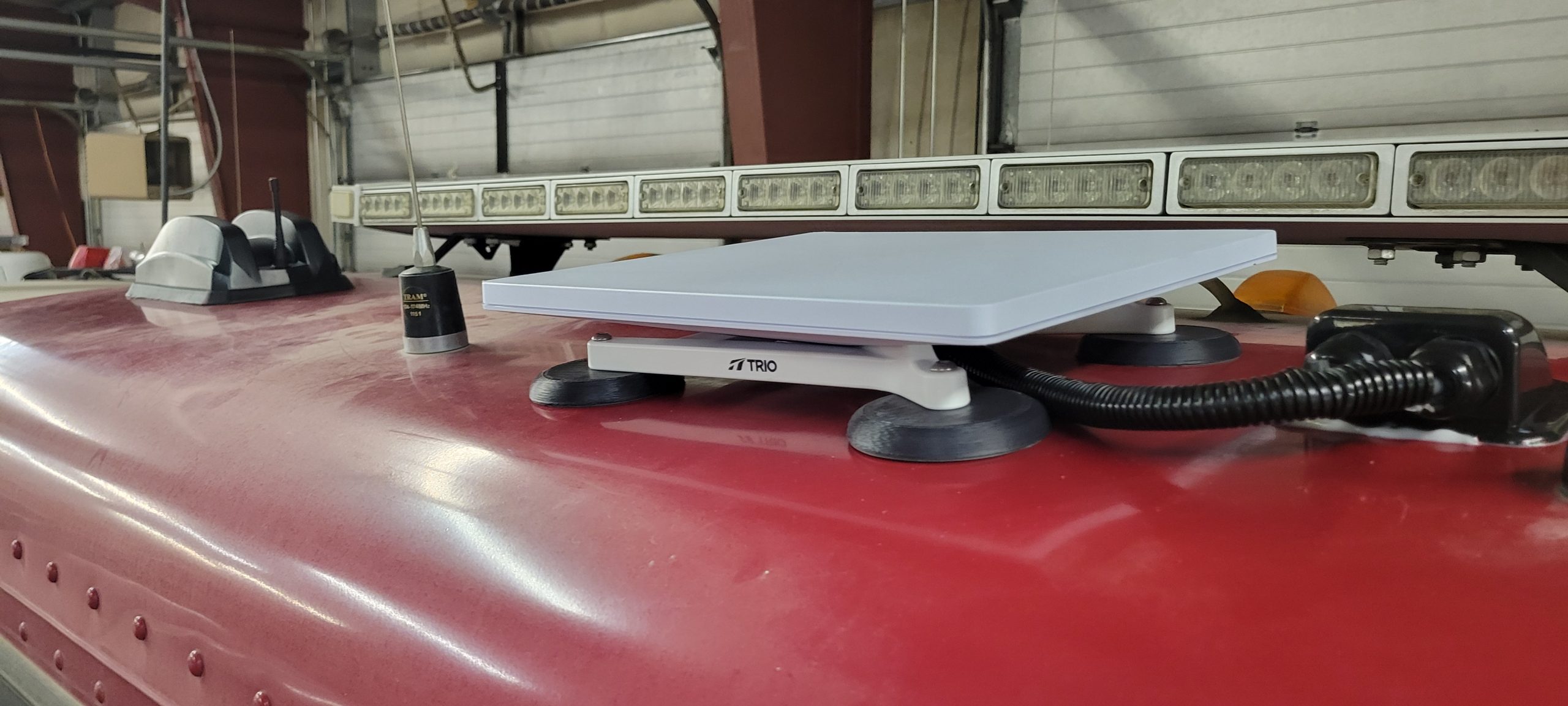
The terminal is only one part of the deployment. The complete solution must be designed around the vehicle, existing equipment, applications and operational expectations.
Terminal Selection
Select hardware appropriate for land mobility, vehicle dimensions, expected performance, operating environment and service plan.
Mounting Location
Position the terminal to preserve sky visibility while accounting for rooftop equipment, lighting, air-conditioning units and vehicle-clearance requirements.
Power and Shutdown Behavior
Determine how the system will be powered while the vehicle is operating, staged or turned off, and how it will interact with vehicle battery-management requirements.
Environmental Conditions
Consider temperature, weather exposure, vibration, road debris, washing procedures and the operational environment surrounding the vehicle.
Router Integration
Integrate Starlink with the fleet router and supported cellular connections so crews do not need to manage separate networks during a response.
Network Security
Define segmentation, VPN requirements, application policies, device access and cybersecurity controls before deployment.
Remote Monitoring
Provide authorized personnel with visibility into vehicle status, connectivity performance and data usage without requiring access to the ambulance.
Support and Lifecycle Management
Plan for activation, troubleshooting, service changes, hardware replacement, software updates and future fleet expansion.
The IP Access Difference
More Than a Starlink Terminal
IP Access International is an Authorized Starlink Reseller with decades of experience supporting public safety and mission-critical operations.
We help agencies move beyond purchasing hardware by designing the connectivity environment around the fleet's applications, operating area and communications requirements.
- Managed Starlink service and hardware
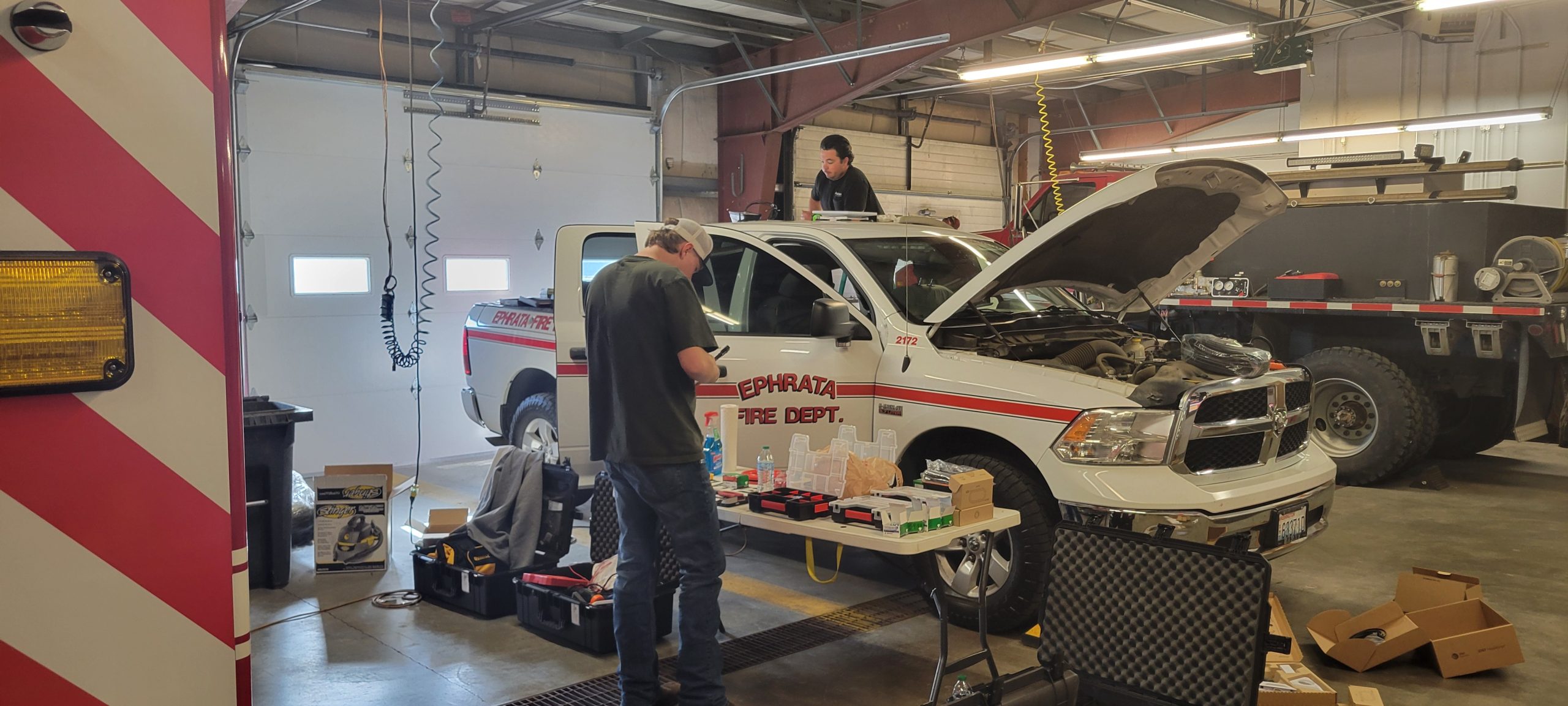
- Professional public safety vehicle installations
- Integration with LTE, 5G and additional network paths
- Fleet-wide connectivity planning
- Remote monitoring and service management
- 24/7/365 U.S.-based Network Operations Center support
- One team supporting the complete connectivity environment
Through SuperGIG™ managed connectivity , agencies can combine supported satellite and cellular connections into a unified fleet network designed to maintain application continuity as vehicles move between coverage environments.
Agencies evaluating broader vehicle deployments can also explore our mobile connectivity solutions for ambulances, fire apparatus, command vehicles and other mission-critical fleet assets.
Additional Resources
Emergency Communications and EMS References
These independent federal resources provide additional information about EMS telemedicine, resilient emergency communications and continuity planning.
Federal EMS recommendations addressing the expansion of telemedicine and telehealth services within the EMS environment.
Federal resources focused on secure and resilient communications for public safety, national security and emergency preparedness.
The national strategic framework for strengthening and enhancing emergency communications capabilities.
Public safety examples and considerations for incorporating redundancy into emergency communications planning.
Connect Your Fleet
Planning Starlink Connectivity for One Ambulance or an Entire Fleet?
IP Access can help your agency evaluate hardware, service, vehicle installation, network integration and ongoing support as part of a complete fleet connectivity strategy.