
Is a Cellular Hotspot Enough for Emergency Management?
A hotspot can handle everyday field work. Remote deployments, growing operational needs and disrupted cellular networks call for a connectivity plan with more than one path.
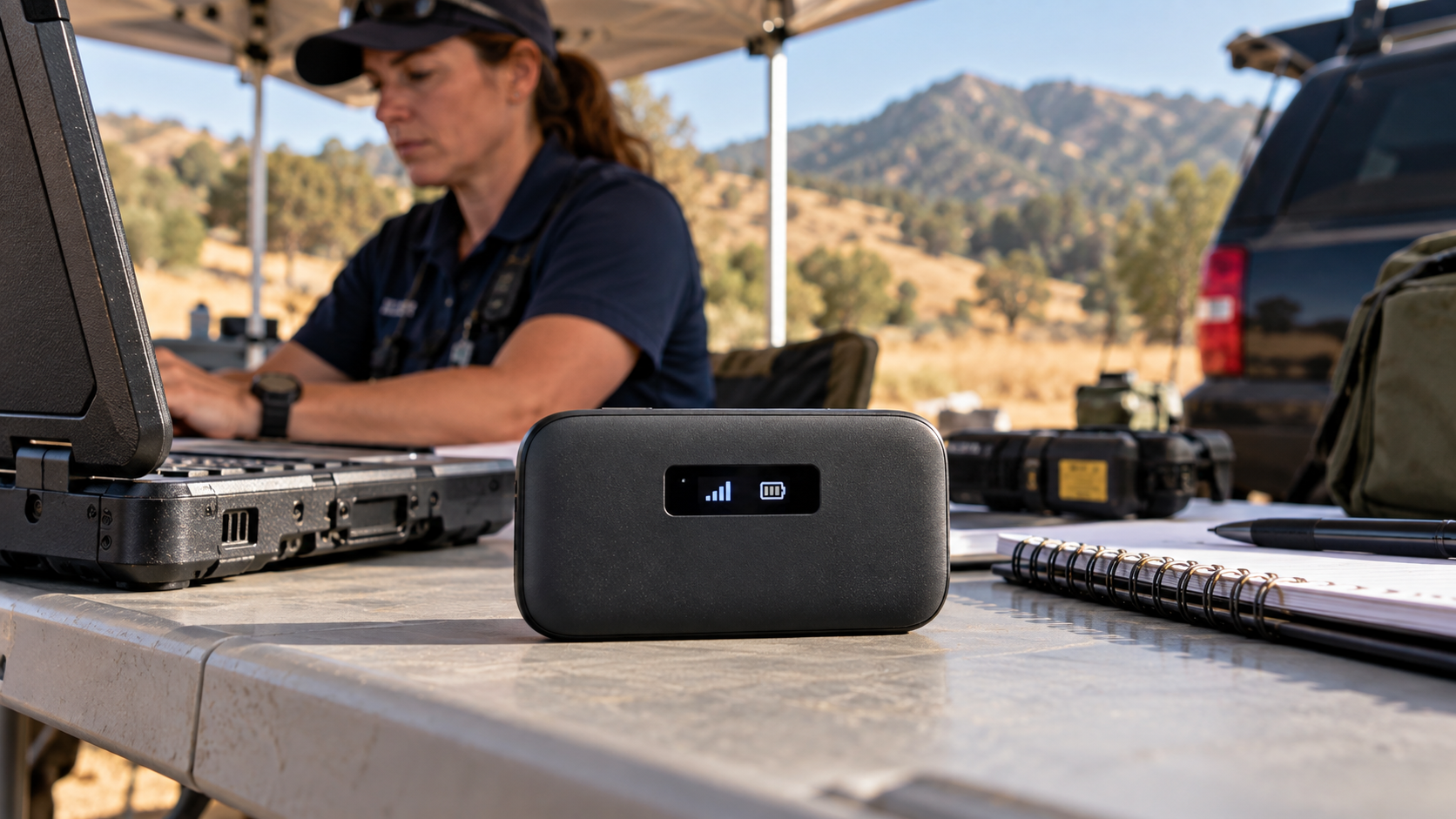
A cellular hotspot is often the first tool an emergency management team uses to get connected in the field. It is portable, familiar and convenient for connecting a laptop, checking email or accessing applications away from the office.
For routine work in areas with good coverage, it may do exactly what the department needs. The question is what happens when the assignment changes: a remote command post, an evacuation shelter, a prolonged deployment or an incident that disrupts the local cellular network.
A hotspot can remain useful long term. Relying on it as the department’s only remote connection, however, leaves operations dependent on the availability of that cellular network.
Everyday Coverage Does Not Guarantee Incident Coverage
A hotspot connects through the cellular network available at its location. Signal strength, terrain, nearby structures, network capacity and the service plan can all affect performance.
A device that works well around town may struggle at a rural staging area or temporary shelter. Emergency managers cannot always choose where they need to operate, so planning should include the locations where coverage is uncertain.
The emergency can affect the network itself
Damaged cell sites, power outages or disrupted backhaul—the connections carrying traffic from towers into the wider network—can interrupt service. A fully charged hotspot still needs a functioning cellular network.
The First Responder Network Authority identifies disasters, large incidents and remote locations as situations where deployable cellular coverage may be needed.
Public safety priority helps, but coverage still matters
Eligible public safety services can provide priority and preemption to help responders access network resources during congestion. Departments should verify what their specific plan includes. Priority does not create coverage where none exists or restore damaged infrastructure.
Field Requirements Can Grow Beyond a Hotspot
One employee checking email has different connectivity needs from a team supporting an active incident. As operations expand, the connection may need to support:
- Multiple staff laptops and tablets
- Shared maps and incident information
- Video meetings and coordination calls
- Document and photo uploads
- Secure access to agency systems
- Wi-Fi for authorized personnel
Depending on the device and plan, a basic hotspot may have limitations involving connected users, data allowances, battery runtime, external antennas or remote management.
These capabilities should be evaluated against the expected workload and deployment duration. A connection that supports a short site visit may need a different design to support a command team through an extended incident.
Where Starlink Fits
Adding Starlink gives the department an internet connection that does not depend on local cellular towers. That creates another option where cellular service is weak, unavailable or disrupted.
Satellite has its own deployment requirements. Starlink needs power, an appropriate service plan and a suitable view of the sky. Trees, structures and terrain can affect the connection, making equipment placement part of the operational plan.
Convenient where coverage is available
Supports mobile and field operations through available terrestrial networks. Performance depends on coverage, capacity and infrastructure conditions.
Another route beyond local towers
Provides a separate access path where cellular service is limited, subject to sky visibility, power and the selected equipment and service.
The value comes from having different paths available. Cellular may perform well at one location, while satellite provides the stronger connection at another.
Starlink should be evaluated as part of the department’s broader connectivity plan, including where it will be deployed, how it will be powered and who will support it.
Two Devices Do Not Automatically Create One Network
Carrying a hotspot and a satellite terminal gives staff more options. It does not automatically coordinate those connections or keep applications connected as network conditions change.
If personnel must manually switch between separate Wi-Fi networks, active calls, VPN sessions or application connections may be interrupted, depending on how those services are configured.
A blended connectivity solution brings supported connections into a common gateway. With the right configuration, multiple cellular carriers and satellite can work together while the system evaluates available paths in real time.
SuperGIG™ brings supported cellular and satellite services together through real-time blending. Configurations can be designed for portable field operations, command vehicles or fixed facilities, with managed service and support.
The equipment, service plans and network design should match the department’s applications, operating locations and continuity requirements.
Plan Around the Places Your Team May Need to Work
Start with the mission. Identify the applications that must remain available, the number of people expected to connect and the locations where the department may deploy.
- Map known cellular coverage gaps
- Identify essential applications
- Estimate users and data requirements
- Plan power for extended deployments
- Evaluate satellite sky visibility
- Define monitoring and support responsibilities
Then test the complete system at representative locations. Include normal workloads, changes in network availability and the steps personnel will follow when a connection becomes unavailable.
A hotspot can remain part of that plan. Adding another path—and a practical way to manage it—helps the department prepare for conditions it cannot control.
Emergency Management Connectivity FAQ
Is a cellular hotspot a bad choice for emergency management?
No. A hotspot can be useful for routine work and field deployments where coverage and capacity are adequate. The concern is relying on it as the only connection when operations must continue through cellular coverage gaps or disruptions.
Does public safety priority eliminate the need for satellite?
Priority and preemption can help eligible users during cellular congestion. They do not eliminate coverage gaps or dependence on cellular infrastructure. Satellite can provide a different access path when local cellular service is unavailable.
Can Starlink work without cellular service?
Yes. Starlink does not require a local cellular connection to provide internet access. It does require power, active service and a suitable view of the sky.
Does adding Starlink automatically blend it with a hotspot?
No. Separate devices do not automatically combine their connections. Blending requires compatible gateway equipment, supported services and an appropriate configuration.
What should a department test before deployment?
Test essential applications, expected user loads, power runtime, Wi-Fi coverage, satellite placement and behavior when a network path becomes unavailable. Personnel should also know how to operate the equipment and obtain support.
What Happens When Your Hotspot Loses Service?
Tell us where your team operates and which applications need to stay connected. We can help evaluate a cellular and satellite configuration that fits the mission.