
Public Safety Redundant Communications: Why One Backup Connection Is Not Enough
True communications redundancy requires more than a second device or carrier. Public-safety agencies need independent network paths, active performance awareness and a design built around essential operations.
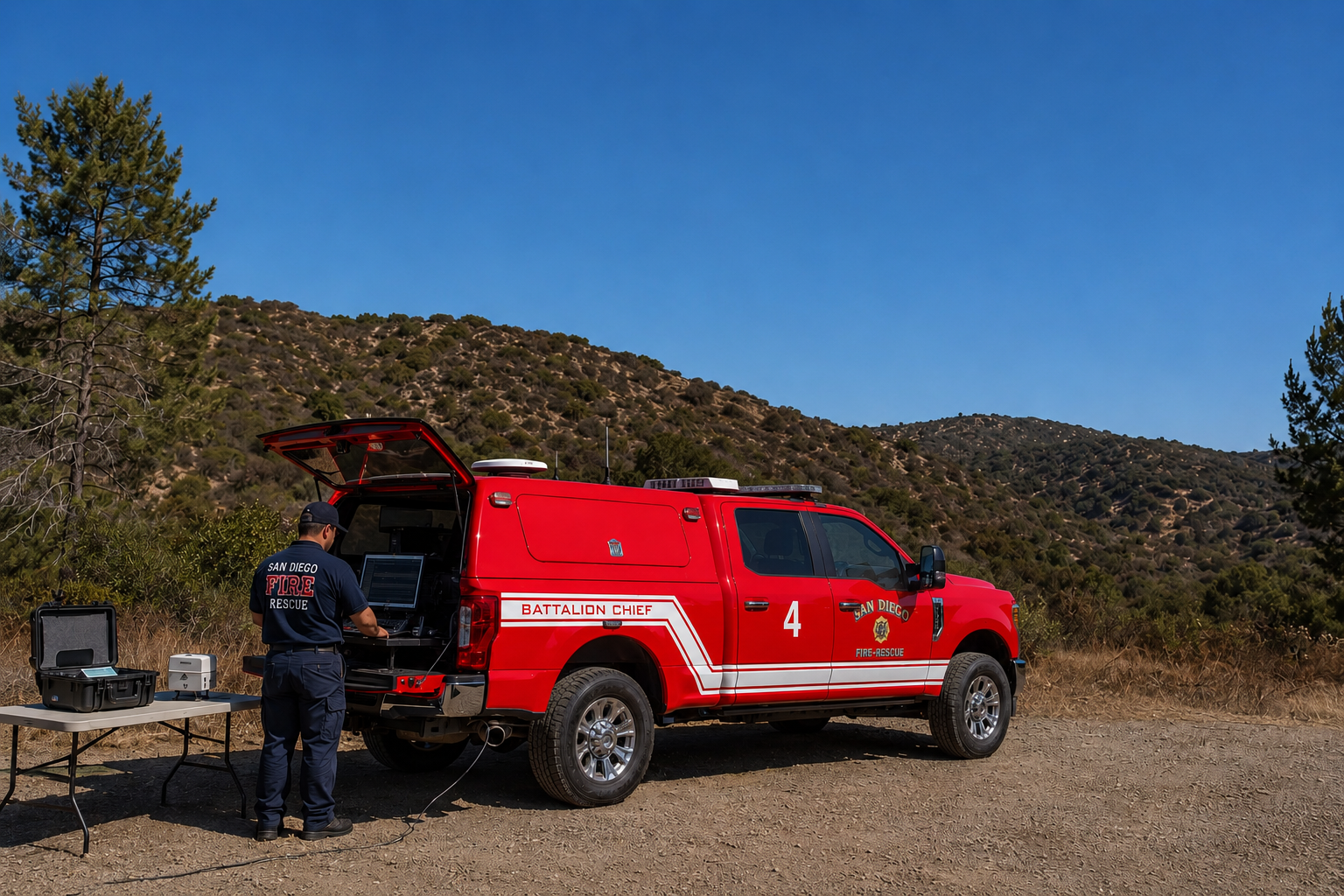
Public safety agencies rely on communications every day. However, the risk becomes greater during a major incident. For example, networks may become congested, infrastructure may fail and teams may move beyond normal coverage.
For that reason, public safety redundant communications should be part of the operational plan. Redundancy gives agencies more than one way to keep essential voice, data and applications connected.
Still, adding a second device does not always create true redundancy. Agencies must consider how each connection works, what it depends on and what happens when conditions change.
What Are Public Safety Redundant Communications?
Public safety redundant communications use independent paths to support critical operations. If one path becomes weak or unavailable, another path can help maintain access.
The goal is not to add technology for its own sake. Instead, the goal is to protect the applications and communications that personnel need to do their jobs.
Redundancy Must Start With the Mission
Every agency has different requirements. A patrol vehicle may need CAD, AVL, records access and video. Meanwhile, an ambulance may need routing, patient-care applications and telemedicine tools.
A mobile command unit will have another set of needs. It may support many users, live video, dispatch coordination and several partner agencies at once.
Therefore, the first question should not be, “Which backup device should we buy?” A better question is, “Which functions must continue when our normal connection does not perform?”
Once the agency answers that question, it can design redundancy around the mission.
A Second Carrier May Share the Same Risk
Many agencies use two cellular carriers for redundancy. This approach can improve coverage because carriers do not perform equally in every location.
However, two carrier connections may still depend on similar local infrastructure. A widespread outage, damaged backhaul, power loss or heavy congestion can affect both paths.
As a result, carrier diversity and infrastructure diversity are not always the same thing.
More Than One Cellular Option
Multiple carriers can improve coverage and give a system more paths to evaluate.
Different Types of Networks
Terrestrial and space-based paths reduce dependence on the same local infrastructure.
LEO satellite connectivity can add a space-based path that does not rely on the same nearby towers. It can support remote operations and provide another option during terrestrial disruptions.
However, satellite service also has operating requirements. The antenna needs a suitable view of the sky, proper installation, power and a service plan that fits the deployment.
True redundancy comes from understanding the strengths and limits of every available path.
Backup Is Different From Active Network Diversity
A traditional backup connection often sits idle until someone notices a problem. Then, equipment or personnel may need to switch services.
That delay matters during an emergency. In addition, a backup connection that has not been tested may not work as expected when the agency needs it.
Active network diversity takes a different approach. Multiple connections can remain available to the system. Network intelligence can then evaluate performance as conditions change.
For example, one network may show strong signal strength but poor real-world performance. Another may offer lower latency or more usable bandwidth. Therefore, network decisions should consider connection quality, not signal bars alone.
Redundant Communications for Connected Vehicles
Police cars, fire apparatus, ambulances and command vehicles now operate as mobile technology platforms. They depend on connectivity for much more than email.
A connected public-safety vehicle may support:
- Computer-aided dispatch
- Automatic vehicle location
- Mapping and routing
- Records and cloud applications
- Live and recorded video
- Wi-Fi for nearby personnel
- IP-based radio extension
- Remote equipment monitoring
If the vehicle depends on one network, every application shares that single point of failure. In contrast, a multi-network design gives the vehicle more ways to stay connected across its service area.
In addition, the vehicle can create a local connectivity bubble. Authorized personnel and devices can connect near the vehicle, even when the incident is far from a station or fixed facility.
Redundancy Can Help Extend Radio Communications
Land mobile radio remains central to public safety operations. Redundant broadband should augment that investment, not automatically replace it.
With the right gateways and system design, an IP connection can help extend compatible radio communications. For example, a connected vehicle can provide a path between a portable radio and dispatch from an area with limited conventional coverage.
However, radio extension requires more than an internet connection. Agencies must evaluate their radio equipment, gateways, talk groups, security policies, coverage goals and operating procedures.
Deployable Communications Need More Than Hardware
Portable communication systems can provide connectivity at wildfires, storms, planned events, mutual-aid incidents and temporary command sites. Yet the equipment inside the case is only one part of the solution.
Agencies should also plan for:
- Power: How long must the system operate?
- Setup: Who will deploy and position the equipment?
- Capacity: How many users and applications need access?
- Management: Who will monitor networks and data plans?
- Support: Who will respond when something does not work?
- Readiness: How often will teams test and train with it?
Most importantly, personnel should know how the system behaves before an emergency. Routine testing can reveal coverage limits, setup problems, outdated software or service-plan issues.
One Provider Can Simplify a Multi-Network Design
Network diversity can introduce management challenges. Several carriers, satellite services, routers, antennas and support contacts can create confusion.
IP Access International helps agencies bring those pieces into one managed communications environment. Our team can support system design, hardware, activation, installation, network management and 24/7/365 U.S.-based assistance.
SuperGIG™ combines selected terrestrial and LEO satellite connections into one managed network. Its quality-based Smart Blending Technology evaluates available paths in real time. As a result, operational traffic can use the connections that are performing.
The platform can support vehicles, field teams, command units, emergency operations centers and temporary incident sites. Furthermore, agencies have one experienced team to call when they need support.
Explore SuperGIG™Build Redundancy Before the Incident
The middle of an emergency is not the right time to discover that two “independent” connections share the same weakness.
Instead, agencies should identify essential applications, document coverage challenges and test each communications path. They should also decide how personnel will respond when network conditions change.
Public safety redundant communications are not simply about having more equipment. They are about creating practical options, removing single points of failure and keeping teams connected to the information they need.
IP Access can help your agency evaluate where communications need to work, which applications must stay available and what combination of terrestrial and space-based networks fits the mission.
Public Safety Communications Redundancy FAQ
What are redundant communications in public safety?
Redundant communications give public-safety teams more than one path for essential voice, data and applications. These paths may include multiple cellular carriers, LEO satellite, fixed connections, agency Wi-Fi and compatible IP communications systems.
Are two cellular carriers considered redundant?
Two carriers can improve coverage options. However, they may still rely on similar local power, towers or backhaul. Adding a different type of network, such as LEO satellite, can provide greater infrastructure diversity.
Can LEO satellite support public safety redundancy?
Yes. LEO satellite can add a space-based internet path for remote areas and terrestrial disruptions. Agencies still need the right antenna placement, installation, power, service plan and network management for the deployment.
Does redundant broadband replace public-safety radio?
No. Redundant broadband can augment existing land mobile radio systems. With compatible gateways and the right design, IP connectivity may also help extend radio communications into areas with limited conventional coverage.
Where Does Your Communications Plan Have a Single Point of Failure?
Tell us which applications must remain available and where your teams operate. We will help you evaluate the right mix of terrestrial and space-based connectivity.